Showing posts with label library music. Show all posts

Thursday, 8 December 2016

BBC Sound Effects Records (early 1970s)

In the early 1970s, the BBC produced numerous sound effects records. Though many were created for educational purposes, such as 'Squeaky Eyeballs' (1973), the public were encouraged to utilise the more practical releases in their daily lives.
Expressing emotion or personal thoughts in both private and public had long been outlawed. Records such as 'British Tutting' (1970) allowed the disgruntled listener to listen to a variety of legally sanctioned tuts as a sort of surrogate expression of displeasure. Equally, 'Inconsolable Weeping in Libraries' was a soothing, lawful substitute for the act itself.
As familial contentment was also prohibited in the 1970s (apart from at Christmas when it was compulsory. See HERE), some families, frightened that their satisfaction might be discovered and reported, opted for albums such as those from the BBC's Divorce Series, which they would play at elevated volumes for the ears of prying neighbours or passing government agents.

Not all deceptions were successful. If a family was arrested they would be taken to their local police station where, while waiting to be interrogated by specialised officers, they might be played an album such as 'Uncomfortable Silences'.


Thursday, 9 June 2016

Europe Referendum TV advertisement (1975)


During the lead up to the 1975 EEC referendum, the government realised that the only way it could maintain its authority was to appear equally for and against Europe. It did this in two ways: First, by having its ministers wildly contradict each other on an almost daily basis, and second, by rejecting the use of facts and evidence, which the state viewed as hindrances in the political sphere. This strategy would eventually be formalised in the 1976 Truth Reform
 
The population was confused by this persistent doubletalk and consistent vagueness, but confusion was very much intended. Those in power know well that if their true positions can be obscured through contradiction they can never be shown to be wrong and therefore can't ever be opposed effectively. When citizens can no longer differentiate between truth and fiction, they are easier to control.

Scarfolk politicians were the first to utilise 'puzzlement politics'. Though their first attempts were crude - pumping ergot into the water supply and lobotomising people during routine tonsillectomies - they eventually launched the more nuanced "Don't" and the "No!" campaigns. These made the populace much more manageable and much less likely to shuffle around in circles drooling.

Incidentally, the music by Steven O'Brien in this advertisement also appeared on the Scarfolk library LP The Big Brass Sound of Patronising Encouragement.

Friday, 18 September 2015

Library Music LPs (1970s)

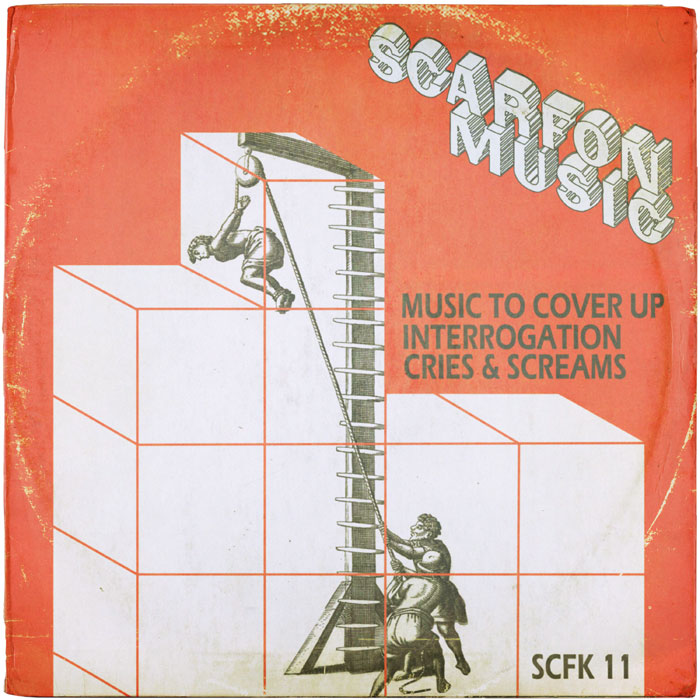
Library music is often used in television, radio and film productions. This low-budget, pre-written music is intended to convey particular moods to the audience. Entire LPs, named by theme and often in multiple volumes, are dedicated to a wide variety of moods and concepts such as 'business dynamism', 'modern leisure', 'relaxed terror', 'perky dismay' and 'unspecified uncertainty'.


The library music records presented here were found in the Scarfolk Council archive. Our files show that audio from them was included not only in many of Scarfolk's public information and infant indoctrination films, but they were also the soundtracks to party political broadcasts of the 1970s.


Library music was also used by large corporations in their threatening advertising campaigns, as well as the aggressive training and breaking of ineffective, altruistic employees.


Additionally, subliminal audio from releases such as 'Sound Frequencies to Induce Unconditional Obedience' (Music de Scarfolke, 1970) was broadcast on all local television channels on the hour, every 8 hours, for a duration of 3 seconds. It triggered in citizens the compulsion to stand at their open front doors and shout out confessions to thought crimes they had perpetrated during the day. Teams of social workers hiding in bushes and beneath cars recorded the confessions for later exploitation by the state. For example, up until 1979, a portfolio of each citizen's crimes was buried with him so that any outstanding sentences or punishments incurred in this life may be carried over into the next.


Thursday, 29 May 2014

"Clay Stool" TV theme tune (Klofracs Records, 1973)

The theme tune from "Clay Stool," a popular 1970s children's daytime TV programme for 4 to 7 year olds, was released as a single in 1973 under the title "Demons Come In All Shapes & Sizes."
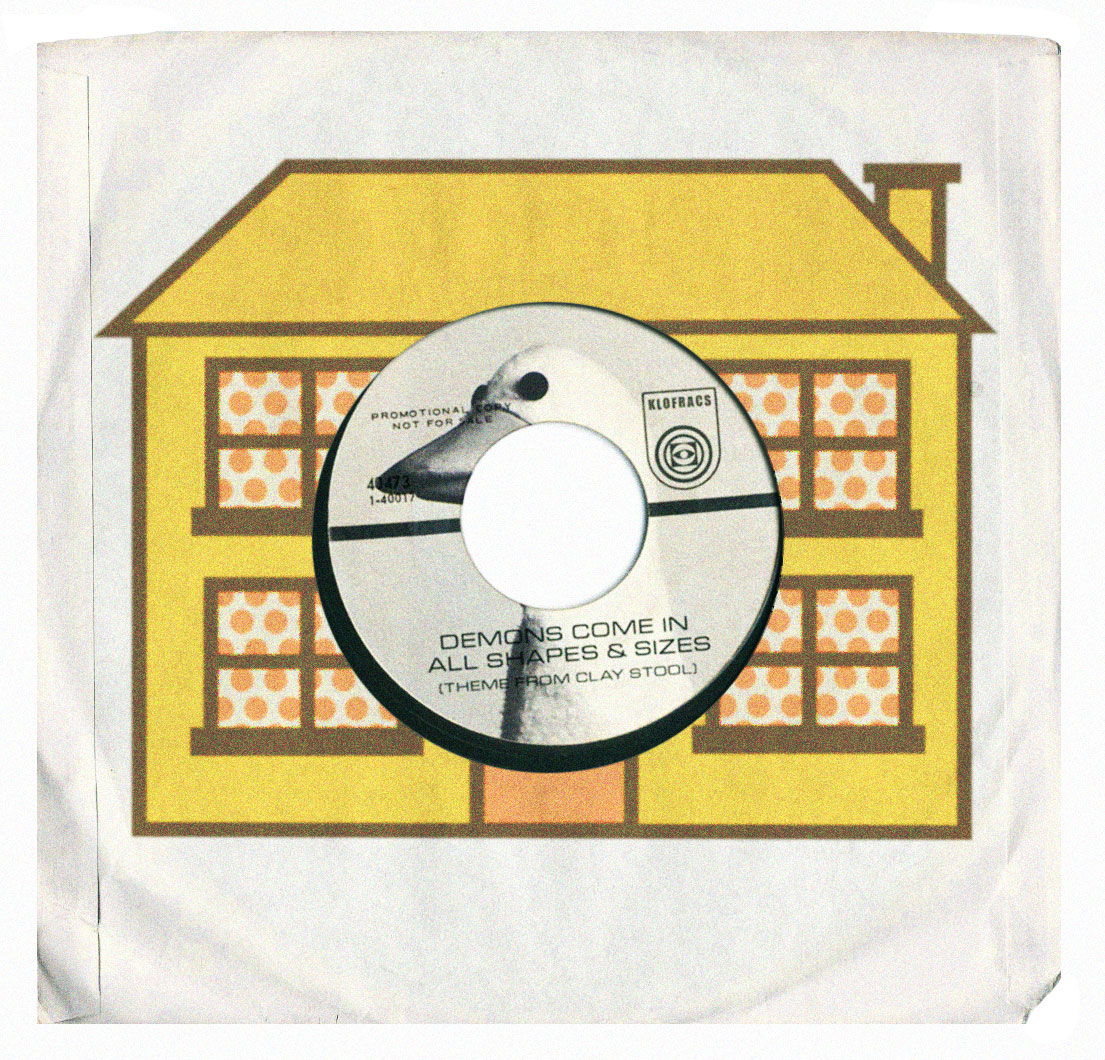

"Clay Stool" acquired its name from a form of medieval punishment for witchcraft. Originally, alleged witches were strapped to a wooden chair - a ducking stool - then plunged into a river. If they sank they were innocent, if they floated they were in league with the devil and summarily executed.

Samuel Revile, a local priest and freelance misogynist, wondered if ducking stools, which were traditionally festooned with dozens of inflated pigs' bladders, colourful helium balloons, and tethered albatrosses had something to do with the high numbers of people being found guilty.

Revile set about inventing the heavier "clay stool." A year after its introduction 100% of accused witches, mostly women, had plummeted to the riverbed where they drowned, proving their innocence.

Revile's work also alerted communities to the dangers of balloons. It was they, he maintained, not the women, that floated and were therefore in league with Satan. To this day, people who make balloon animals are considered unholy and are barred from church jumble sales.

Though Revile revolutionalised the justice system by inventing compassionate torture, he inadvertently caused widespread redundancies in the execution sector.


Listen to the single here:


Or watch the video here:

Thursday, 21 February 2013

The Children of Scarfolk Primary School - "In the Playground with the Music Room Window Open, May 13, 1975"

Back in 1975 the children of Scarfolk primary school released their own 45rpm record to commemorate their music teacher Mrs Payne who disappeared in mysterious circumstances. Her body was found encased inside one of the thirteen ancient standing stones just outside Scarfolk.

Proceeds from the sale of the single went toward the building of a new coven and affiliated gift shop.


Wednesday, 20 February 2013

Scarfolk Ice-Cream range, 1979

In Scarfolk the ice-cream van man comes between 3 & 4am. You can hear him blaring the haunting Swedish Rhapsody numbers station* from over a mile away.

The ice-cream van man wears a clown mask to disguise the horrific burns on his face because he doesn't want to frighten the children. He uses clothes pegs to hold the mask on because he is missing an ear.

He lives in a nondescript building in an electrical substation and no one knows his name.


*Here's a recording of Scarfolk's ice-cream van playing the Swedish Rhapsody Numbers Station.
http://www.youtube.com/watch?v=GUQUD3IMbb4

Wednesday, 13 February 2013

"Dormin Slowly Died with the Radio On" (Scarfolk Records 1974)

From Scarfolk Records 1974.
The debut ambient album from 'Ragle' called "Dormin Slowly Died With The Radio On. Parts 1-82"
This is part 71.
It won 2nd prize at the Scarfolk harvest festival, having lost out to Gary Butters from Scarfolk primary school, class 5, who came 1st with his song "Eagle Eye Action Man."
Ragle was the stage name of Eddie Rumpburn who was the manager of Twazzle's Hardware shop on East Twazzle Parade between 1970 and 1978. 


Tuesday, 12 February 2013

"A Day at the Seaside" (Scarfolk Music & Audio Library Vol. 1)

Scarfolk Council is proud to announce its musical debut!

Here's "A Day at the Seaside" from the "Scarfolk Music & Audio Library Vol. 1" released in 1973.

Click below on the soundcloud two-channel stereophonic music-centre. No batteries or cables needed. No home taping.