Showing posts with label thought crime. Show all posts

Wednesday, 31 May 2017

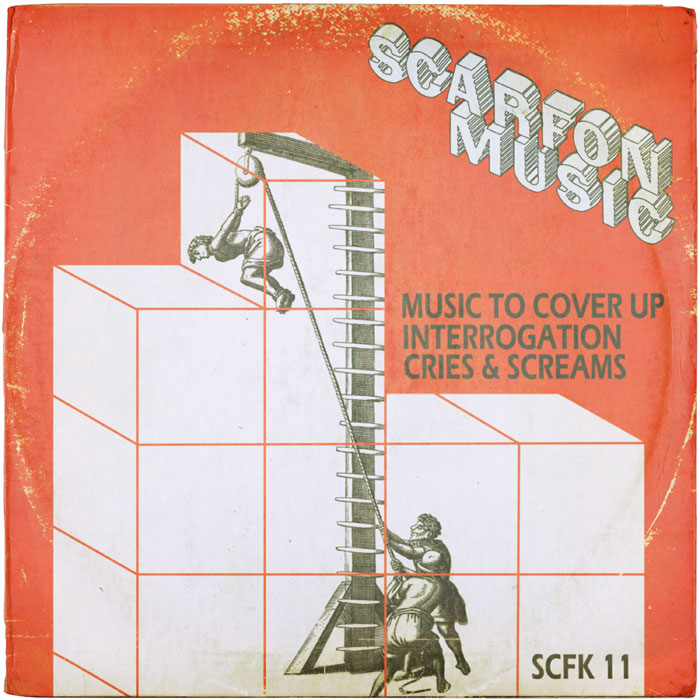
Police Interrogation Safewords


Almost everybody endured police interrogations at some point during the 1970s. They were so frequent that most families had a packed bag by the front door (people were expected to bring a spare change of underwear and their own first-aid supplies).

If by chance all members of a family were summoned together, they might make a day of it, have a picnic in the prison facility's Garden of Incorruptibility and watch the interrogation of their loved ones on big monitors. Laugh tracks were included to minimise distress.

While the security services were openly proud of their slogans such as "we promise to raise a glass to those who don't confess", if a detainee did suffer irreversible psychological or physical damage as a result of their interrogation, the family was awarded a £5 book token and a potted cactus as compensation.

More about Scarfolk Security Services.

Thursday, 28 July 2016

"People Are Dangerous" (1974-1975)


During the People Purges of 1974 and 1975, the many people who peopled Scarfolk were alarmed to learn that they were now the kinds of people that the government categorised as "people".

With no clear definition of what the state meant by "people", the mayor, who had previously declared himself a man of the people, tried to alleviate anxiety among his people by saying he didn't want to drive a wedge between people; he only intended to arrest those kinds of people who he deemed not to be "people people".

He said that he of all people knew that the most effective way to crack down on these people was with "people power": People working together to observe people, being able to tell people apart and then reporting those people to the appropriate people in authority.

On the 13 August 1975, the only people not in prison were six government officials, members of Scarfolk police force and a man called Dennis Peoples who suffered from a rare psychiatric syndrome called Clinical Lycanthropy which led him to believe he was a puffer fish.

Friday, 18 September 2015

Library Music LPs (1970s)

Library music is often used in television, radio and film productions. This low-budget, pre-written music is intended to convey particular moods to the audience. Entire LPs, named by theme and often in multiple volumes, are dedicated to a wide variety of moods and concepts such as 'business dynamism', 'modern leisure', 'relaxed terror', 'perky dismay' and 'unspecified uncertainty'.


The library music records presented here were found in the Scarfolk Council archive. Our files show that audio from them was included not only in many of Scarfolk's public information and infant indoctrination films, but they were also the soundtracks to party political broadcasts of the 1970s.


Library music was also used by large corporations in their threatening advertising campaigns, as well as the aggressive training and breaking of ineffective, altruistic employees.


Additionally, subliminal audio from releases such as 'Sound Frequencies to Induce Unconditional Obedience' (Music de Scarfolke, 1970) was broadcast on all local television channels on the hour, every 8 hours, for a duration of 3 seconds. It triggered in citizens the compulsion to stand at their open front doors and shout out confessions to thought crimes they had perpetrated during the day. Teams of social workers hiding in bushes and beneath cars recorded the confessions for later exploitation by the state. For example, up until 1979, a portfolio of each citizen's crimes was buried with him so that any outstanding sentences or punishments incurred in this life may be carried over into the next.


Friday, 14 August 2015

"Thought Policy" Leaflet (1976)

Below is a leaflet published by the Scarfolk council department that was set up in 1973 to deal with citizen thought detection and control.

In addition to the thought-detector vans which prowled Scarfolk's streets (see HERE for more information), citizens were expected to undergo regular thought inspections.

At the time, thought terrorism was rife and most major public buildings and spaces had security checkpoints. Citizens were expected to read, understand and answer the questions put to them in the leaflet before being scanned by an IDS (Idea Detection Scanner). Initially, IDSs were just ex-policemen who had failed psychiatric empathy tests after sustaining severe head injuries. The practice of using such policemen was stopped when it was discovered that the method they used to extract thoughts from citizens' heads involved the use of a big, sharp stick and an ice-cream scoop. More accurate IDS machines eventually replaced the policemen, drastically reducing human error, though the stick and ice-cream scoop were retained.


Thursday, 30 July 2015

Roy, The Telekinetic Child-Owl (1973-1979)

Scarfolk Council was no stranger to invading the privacy of ordinary families. Back in December we introduced you to the council Christmas Boy (see HERE) who strictly monitored the contentment of families during the festive season. We've since received letters asking how the council kept households in check during the rest of the year.


In 1973 the council engineered a genetically modified creature called Roy. He was the result of cross-breeding barn owls with surplus human infants raised by prying, judgemental, lower-middle-class parents. Roy was cloned and delivered to every family in Scarfolk. His job was to oversee domestic affairs, and, if any family member deviated from officially sanctioned activity, Roy was to berate them by tutting and shaking his head.

Unfortunately, there had been a clinical oversight. Volatile poltergeist DNA had accidentally contaminated Roy's genes when a careless scientist left open a lab window which looked out onto a supernatural-energy processing plant. Instead of the envisioned tutting and head-shaking, Roy flew into violent rages, triggering major telekinetic events. There were reports of Roys decimating entire families and, in one case, allegedly annihilating an entire housing estate.

The council was under pressure to recall the defective owls, but because there had been a sudden drop in the numbers of families claiming benefits, it announced instead that Roy was a resounding success and millions more of the human-owl hybrid were commissioned by the police and social services.

Thursday, 2 July 2015

"Mindborstal" Psychological Detention Drug


Following the publication of Children and Hallucinogens: The Future of Discipline in 1971, several products were developed by Cavalier Pharm, Scarfolk's largest pharmaceutical company.

In addition to Panopticon, a truth serum designed for minors (see Discovering Scarfolk p.65 for further details), Cavalier Pharm also manufactured a drug called Mindborstal which, as the advertisement above indicates, induced children into a mental state that functioned as a psychological prison.

The detention hallucinations produced by the drug were so potent that they were indistinguishable from reality and children under its influence sat motionless for days and even weeks, locked in delirious trances. They were convinced that they were incarcerated within physical spaces policed by intimidating entities tailored to their own personal fears.

Yet for all of the drug's obvious benefits, it was ultimately recalled when several children were reported to have escaped on imagined giraffes, which their subconscious psyches had somehow conjured into existence. At least, that was the official explanation. Sceptics weren't convinced, even when hundreds of dead giraffes conveniently washed up on Scarfolk beach. Recently leaked documents suggest that the real reason for the recall was a desperate attempt by the council to cover up its covert plan to have the drug renamed and introduced to the town's water supply.

Thursday, 21 May 2015

"Unlearn...Privacy" Cards (1970s)


During the 1970s, the Scarfolk Education Publishing company produced packs of cards which taught children about society and its expectations. In particular, the cards focused on eradicating any false notions that children may have picked up from prohibited books, unauthorised wise people and illegal time immigrants (a flood of which materialised in 1979 to stockpile cake following a devastating pudding famine in the future).

In addition to the 1979 'Unlearn Privacy' pack, examples from which can be seen below, other series included 'Unlearn Altrusim', 'Unlearn Democracy' and 'Unlearn Contentment'.


The aforementioned time immigrants claimed that, by the year 2017, surveillance and the invasion of privacy become so ubiquitous that citizens' brains are connected to a central network. No thought, conscious or otherwise, is permitted expression unless it has been approved by a state computer programme nicknamed 'Brain O'Brien'. However, a backlog quickly accumulates, and many people go without a thought of their own for months, if not years at a time.

Fortunately, the government predicted such an emergency and prepared in advance a series of standardised thoughts, ideas and opinions which it inputs directly into citizens' minds. No doubt it is this considerate civic gesture which leads to the overwhelming majority vote for the incumbent party in many subsequent elections.


The bonus card above comes from an earlier pack, 'Unlearn Compassion', which was published in 1971.

Thursday, 12 March 2015

"The Anti-Weeping Campaign" Magazine Advertisement (1977)


This advertisement appeared in children's magazines in the 1970s following studies into child behaviour. Researchers found that children were essentially miniature sociopaths and the only reason they didn't run amok on murderous rampages was because they couldn't reach the knife drawer in the kitchen.

Unable to kill en masse, they instead demanded attention by intentionally causing accidents and feigning injury or distress: knocking over boiling pans, slipping in dog excrement, leaping out of police helicopters.

In addition to being irksome, infant tears were deemed to be nothing short of psychological weapons. Parents were warned to arm themselves against the emotional assaults of their offspring, particularly because, if left unchecked, their child might eventually develop dark supernatural powers.

Indeed, for many years people believed that infant sobs contained potentially lethal occult messages. For example, the often-heard whine "Please help me, I'm trapped under the front wheels of this bus", when played backwards sounds like "The Moomins will come; they will fuck you up."

Thursday, 5 February 2015

The SCS Living-Eye Surveillance Computer (mid-1970s)

Unfortunately, there's only scant reference to SCS (Scarfolk Clinical Security) in our archives. All we have is a screenshot from one of their television commercials and a page from a pamphlet given out by family doctors in the mid-1970s.


In 1973, SCS caught the government's interest when it claimed that it could combine and reduce the state's annual budgets allocated to the war on crime, censorship, organ donation and breakfast catering.

As you'll read below, the company proposed that reluctant citizens physically participate in the state surveillance process. Though the scheme was voluntary when it began, it quickly became mandatory.


Click to enlarge


However, in 1976 the scheme suddenly collapsed and SCS went into liquidation. The company had already collected the initial 17,001 eyes that were required to run its living-eye surveillance computer, when it realized that it had neglected to invent an eye-to-computer adapter cable.

The now redundant eyes were returned to their donors with a complimentary display stand (actually, an egg cup with 'thank you' painted on it) and a letter that read: "Be proud that you can look yourself in the eye in the knowledge that your eye was once the nation's eyes and ears".


Monday, 22 December 2014

Council Christmas Boy

Over the Christmas period, families in 1970s Scarfolk were plunged into a state of fear. They desperately tried to appear happy - or at least meet the minimum contentment levels - in case a council Christmas Boy turned up at their door to inspect them. Though many families were visited, seemingly concurrently, the council claimed there was ever only one boy. Nobody knew his real name.

Family members would often take turns standing in the front windows of their homes where they mimed laughter in the desperate hope that the Christmas Boy would pass them by. He rarely did. Once inside a home, he would sniff or lick the occupants for signs of stress or unhappiness.The Christmas Boy rarely found what he would deem a legally cheerful family and harsh punishments, which varied, were often meted out on the spot.

Families did not usually realise that they had been visited by the Christmas Boy until an hour or two after he had left because his flute was designed to have soporific effects. When these effects wore off, families might find that one or more members had been removed or that broad grins had been fixed on their faces following minor surgery.


A lawfully merry Christmas from Scarfolk Council. Be content...

Thursday, 23 October 2014

"Ritual & Invasive Mind Control" (Mayflower Books, 1978)

From children to teachers to pensioners; from secretaries to factory workers to black propaganda operatives secretly working for the government disguised as school dinner ladies, mind control was all the rage in 1970s Scarfolk.

Everyone was at it. Dozens of 'DIY' books flooded the market and there was a schism over which was the better method: occult ritual magick, the use of precision medical implements such as straightened wire coat hangers, or television advertising.

Because the government had already employed potent thought-control techniques to cap the cognitive abilities of citizens, most people didn't master much more than the basics, such as the Disco Leech Maneouver (see the book cover below), which reduced the mental age of a subject by up to 4 hours.

An except from chapter one:

"...Carefully insert a finger or medical (non-musical) instrument into the nasal cavity. The opening is quite narrow but about 2 metres in it opens out into a larger chamber. Here you will encounter a marsupial called Zimbardo, who guards the entrance to the brain. You will not be able to pass him unless you agree to a wrestling match (Blavatsky rules). Let him win. Once you have access to the brain you will see that its interior resembles bubble wrap. Use your finger/instrument to pop as many of these 'think pockets' as you feel is appropriate. If the subject begins to gurgle or talk backwards, immediately exit the brain via the nostril, ensuring that you take any litter with you..."


Monday, 18 August 2014

Investigation & Prosecution Pigeons (1973-1979)


In the 1970s the government realised that more crimes were being committed than was technically possible. This was partly due to the fact that 31% of crimes were fabricated by the government to keep citizens in a constant state of anxiety. To maintain its own credibility, the government banned the use of contraceptives for 3 months per year in the hope that the population would rise and thus generate the citizens required to meet the implausible high crime figures.

The scheme backfired when the new population proved to comprise largely blameless, model citizens. However, the government was not convinced of their apparent virtue and created a special, combined investigation & prosecution squad. It invested birds, insects and other animals with the full power of a law court and trained them to spy on citizens, assuming that guilt would inevitably be detected.

In addition to pigeons (see below), there were crack teams of sparrows, cats, butterflies, stoats and tuna, but there were also 'lone wolf' operatives, the most infamous of which was a ladybird who everyone knew as Two-Spots Bailey, though his real identity remains a mystery to this day.
For more about animals being converted into surveillance devices please see the book "Discovering Scarfolk"

Thursday, 29 May 2014

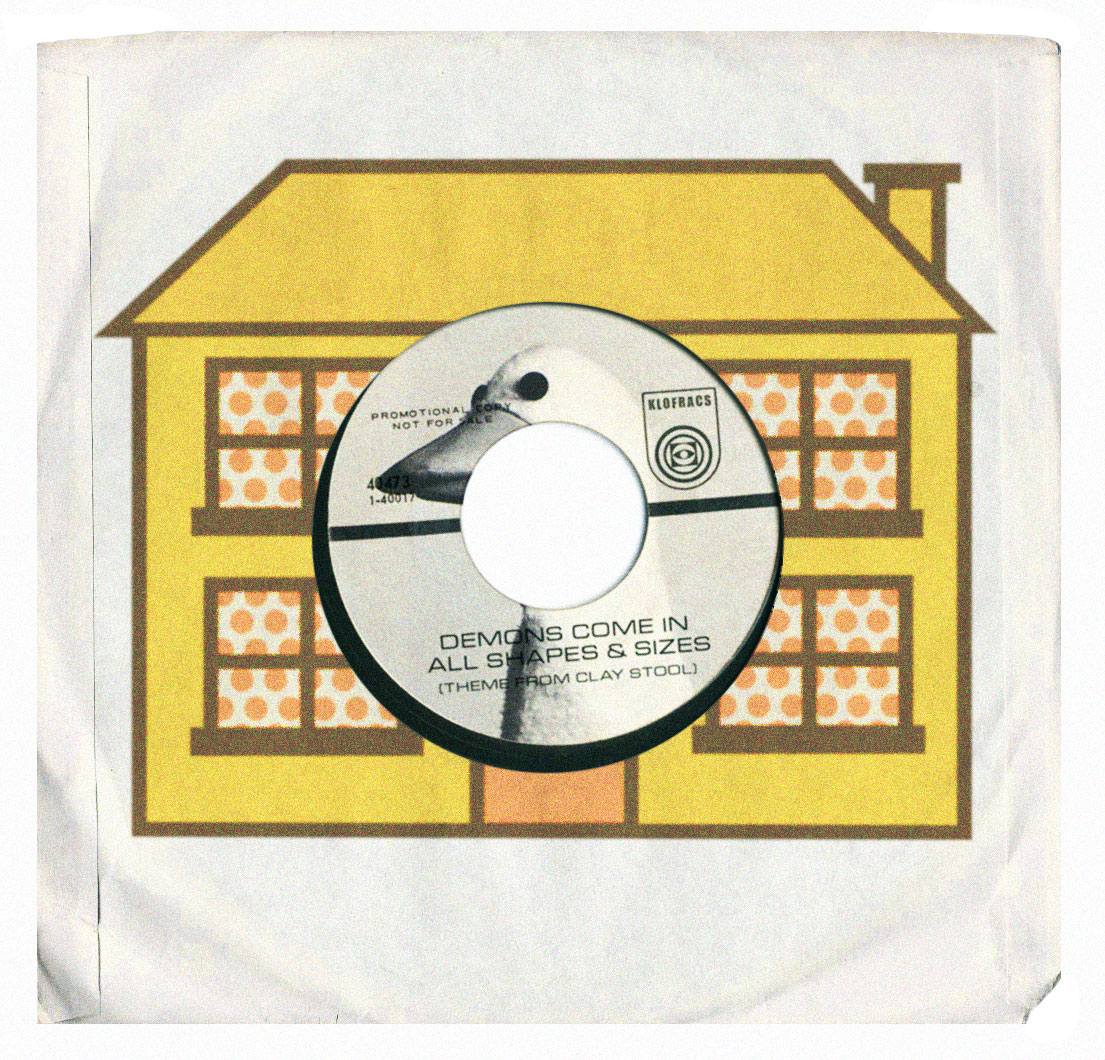
"Clay Stool" TV theme tune (Klofracs Records, 1973)

The theme tune from "Clay Stool," a popular 1970s children's daytime TV programme for 4 to 7 year olds, was released as a single in 1973 under the title "Demons Come In All Shapes & Sizes."


"Clay Stool" acquired its name from a form of medieval punishment for witchcraft. Originally, alleged witches were strapped to a wooden chair - a ducking stool - then plunged into a river. If they sank they were innocent, if they floated they were in league with the devil and summarily executed.

Samuel Revile, a local priest and freelance misogynist, wondered if ducking stools, which were traditionally festooned with dozens of inflated pigs' bladders, colourful helium balloons, and tethered albatrosses had something to do with the high numbers of people being found guilty.

Revile set about inventing the heavier "clay stool." A year after its introduction 100% of accused witches, mostly women, had plummeted to the riverbed where they drowned, proving their innocence.

Revile's work also alerted communities to the dangers of balloons. It was they, he maintained, not the women, that floated and were therefore in league with Satan. To this day, people who make balloon animals are considered unholy and are barred from church jumble sales.

Though Revile revolutionalised the justice system by inventing compassionate torture, he inadvertently caused widespread redundancies in the execution sector.


Listen to the single here:


Or watch the video here:

Monday, 23 December 2013

Christmas Surveillance in Scarfolk


The recent Snowden disclosures about the NSA and GCHQ have revealed that there are no, nor have there ever been any secret 'Secret Santa' gift transactions. Such gift trades have been strictly monitored, and the subsequent data recorded and stored, since 1975.

In addition, in 1970s Scarfolk all Christmas presents had to go through a council clearance department that assessed each gift individually to decide whether or not it was appropriate for the intended recipient.

For example, if an intelligent child had revealed any potentially free-thinking tendencies he would not be allowed to receive books or any other form of educational materials. Such gifts might be substituted for depressants/sedatives, such as Comazepam, or he might receive a Cell Token which he could exchange for a prison term, irrespective of whether or not he had gone to the unnecessary effort of committing a crime.

Everyone at Scarfolk Council would like to wish you a very Merry Christmess, irrespective, or perhaps in spite of, your beliefs. All the very best for the new year; see you in 1974!

Friday, 28 June 2013

"We Won't Forget. So You Can't" (1973)

Illicitly and unconstitutionally spying on a whole nation requires an enormous amount of taxpayers' money. That is why, in 1973, Scarfolk started a scheme to sell surveillance data to the public, the actual object of the aforementioned spying.


By 1970, Scarfolk Council had bugged every room, every street, every public and private space. Even forests, beaches and bouncy castles were wiretapped. Every moment of every resident's life was recorded and archived in vast bunkers in the mountains of Snowdonia and abroad.


All this information was subcontracted to a consortium of corporations called RIMPS that used the data to exploit citizens' psychological weaknesses and/or blackmail them into acts of personal depravity for entertainment. These acts were televised and had viewing figures of millions per broadcast. Many people became household names as shame and celebrity became synonymous.

Friday, 10 May 2013

The "Don't" campaign and Kak, 1973

This public information poster is from the "Don't" campaign, which started in 1973.

The council became increasingly concerned that citizens were too actively involved in 'doing.'
Because 'doing' is a morally and politically ambiguous activity the council decided to take control and enforced 'not doing' until they could clarify and ratify only positive, socially acceptable expressions of 'doing.'

The campaign's mascot was called Kak the bird. To disseminate the 'Don't' message among the youth, all school corporal punishment, daily vaccinations, and dentistry had to be carried out by an adult dressed as Kak.

Parents were also encouraged to dress as Kak then rush in on their young, sleeping children at 3am, and screech as loudly as they could: "Don't, don't, don't."


A "Don't" Kak button badge (1973-74)

Friday, 12 April 2013

"Let's Learn About...Torture" 1976

This textbook was taught in Scarfolk schools in 1976. Here's an excerpt from the introduction:

"Experts agree that information and its communication will be very important in the late 20th and early 21st centuries. Information will become a commodity, sold only to the highest bidders, so it is crucial that students learn how to acquire information as quickly as possible if they want to survive.

Some information can be found in library books, but oftentimes, the most valuable information is buried inside another person's mind. It is up to pupils to mine that information, much like a prospector searches for coal. Sometimes he will use dynamite, other times a powerful drill is more appropriate. There are many ways that a person's mind may be mined.


Here are just a few techniques that you can try on your classmates:

--Scream at them in a high-pitched, helium-inhaled voice without pause for 47 hours.


--Beat the soles of their feet with an effigy of Jesus made out of frozen, compacted ladybirds.


--Pass a pair of stockings dipped in marmalade through their entire body from anus to mouth and then refuse to let them win a game of Monopoly.


--Bake them at gas mark 4 (350 degrees F) for 45 minutes or until the top becomes a rich, golden brown.


--Staple or glue them to a panicking, claustrophobic ostrich..."


Saturday, 6 April 2013

"Black Spot" public discretion cards, 1978

Scarfolk Council had a few problems with outsiders, or "Scarfnots" as they were known, interfering in town affairs throughout the 1970s, so it developed a scheme to encourage civic discretion.

The severity of punishment for a "loose tongue" more or less guaranteed obedience, though a few Black Spot cards were issued.

For example, four year old Jeremy Chapped inadvertently discussed with his "Scarfnot" trepanning teacher the sudden, inexplicable appearances of ancient megaliths in schools and community centres, and found himself facing capital punishment.

In lieu of this penalty he pushed an unloved aunt in the path of a speeding hovercraft for which he received not only a cub scout badge, but also a £5 book token from the mayor.


Monday, 25 March 2013

Thought-Detector vans, 1973

Many will remember the TV detector vans that stalked suburban Britain in the 1970s.

Scarfolk was chosen to take part in a government scheme that tested the latest technology in thought detection, particularly because of the events surrounding "The Tim Seven" in 1972 (See here and here for more details).

The scheme not only successfully reduced the number of telepathic crimes in Scarfolk, but also exposed hundreds of "wrong thinkers."

According to legislation, "a 'wrong thought' is a thought, which, when thought, contains themes thought to be not right, therefore wrong, and therefore prosecutable. An unthought thought may be potentially wrong, but the thought will not be prosecutable until such a time that the thought has been thought and its themes have been thoroughly thought through and deemed wrong by the authorities. Thinking about which specific thoughts may or may not be prosecutable may also be prosecutable."

In 1975 the mayor's brother, Winston, was one of the 90 people arrested for a "wrong thought" involving TV newsreader Angela Rippon, a jar of Robertson's Marmalade, and garden Swingball.