Showing posts with label products. Show all posts

Thursday, 11 January 2018

Real English Wine (Magazine Ad)


The government strongly promoted the ‘Buy British’ message in the 1970s. It was so keen to prove the scientific superiority of British products that large-scale experiments were commissioned.

Scarfolk University, for example, was given four million pounds to develop a computer that could record the brainwaves of hundreds of Real English Wine drinkers and then convert those brainwaves into sounds and images.

Scientists (and advertising agency executives who planned to exploit the results) predicted the result would produce “a wide variety of positive images, including majestic British landscapes accompanied by the sounds of waves and music as beautiful as anything written by maestros such Sir Edward Elgar or Cliff Richard”.

In actual fact, all the subjects’ brains produced exactly the same image: An electrified cage containing a baby monkey whose mind had been destroyed by medical experiments, systematic torture and the jarring sound of a toy mechanical bear mercilessly beating a drum 24 hours a day.

Despite this apparent setback, the Real English Wine committee ran with this image in their advertising campaigns. The wine sold well in Scarfolk, simply by virtue of being British, as did a spin-off ‘soft-toy’ monkey, which wasn’t actually a soft-toy at all, but a real dead monkey.

Friday, 25 August 2017

Scargos Mail-Order Catalogue (1977)

[click to enlarge]

Mail-order catalogues were very popular in the 1970s, so much so that Scarfolk Council carefully monitored them to ensure all the products promoted and maintained the state's social agendas.

Anybody who contravened the attitude regulations of the day was shipped to a makeshift island three miles off the coast and enrolled in reeducation classes that employed electrodes and toxin-dipped knitting needles as teaching aids.

Friday, 28 July 2017

Lip Sewing Kit (1970- )


In 1970s Scarfolk, women over the age of 18 were legally required to be a certain weight and shape. If those who didn't conform to official regulations dared to go outside during daylight hours (assuming they had the appropriate free-movement paperwork), they were stopped on the street by police armed with tape measures, weight scales and portable plastic surgery instruments.

Because kerbside operations were frequently botched, many women went to drastic lengths to meet the government's slender ideal. An example of this was the Lip Sewing Kit (see above) which thousands of women received as Christmas and birthday gifts. It was also sometimes prescribed by doctors.

The kits had originally served a different purpose. They were the brainchild of a government welfare minister (and cotton thread magnate) whose department had previously used them to silence political prisoners and other enemies of the state. When the supply of all such people was exhausted, a commercial application for the product had been sought.

For more about women's rights, see unwed mothers and 'Bastard Lanes', the 'Spread -Em Campaign', romance novels, 'Seducing Students & Secretaries' (BBC 1, 1977) and the 'Women Outside' I-Spy book.

Thursday, 29 June 2017

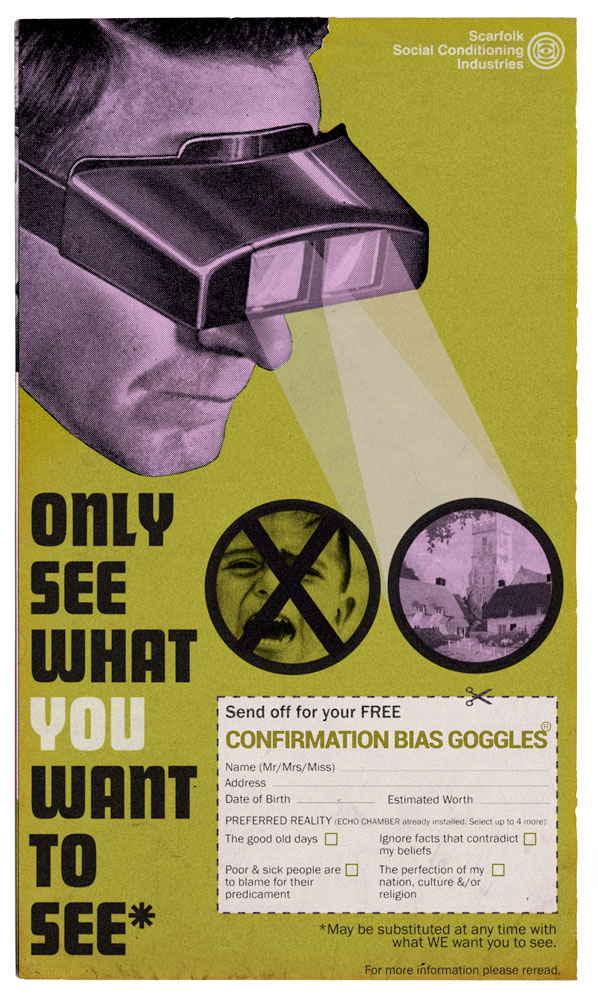
Confirmation Bias Goggles (1970)


Confirmation Bias Goggles were the first wearable technology to be wired directly into the brain. In addition to the pinhead-sized speaker which perpetually broadcast the statement 'Of course you're right!' into the auditory cortex, the goggles' sensors could also switch off those parts of the brain that deal with troublesome emotions and feelings such as empathy, decency and healthy scepticism.

By tapping into the wearer's biases, the goggles literally deleted undesirable objects from the wearer's field of vision. Sights that were too dominant to be erased completely were visually falsified to validate the wearer's preconceptions.

By 1971, the state had adapted the goggles for use in schools. Children were told precisely what to think and what their personal opinions as adults would be.  Unsurprisingly, everybody who tried the goggles, without exception, thought that they were a great idea.


See also: De-education classes, Rub-on transfer newspapers, Mindborstal drug, The Fact Ban, and Children & Hallucinogens: The Future of Discipline.

Thursday, 22 June 2017

Sing-a-Long-a-Savagery (1970s Toy)

In order to prepare children for adulthood, parents in Scarfolk wanted to familiarise their toddlers with life's cruelties as soon as possible. Toy and game manufacturers were only happy to oblige.

ScarToys' Sing-a-long-a-Savagery Music Box TV (see above) contained gruesome images of decapitation, dismemberment and disembowelment by artists such as Goya, Caravaggio and Hieronymus Bosch. The images were accompanied by nursery rhymes such as Girls & Boys Come Out To Maim, Mary Had a Little Laceration, and Wrinkle, Wrinkle, Little Scar (See Discovering Scarfolk p. 159 for more details).

Additionally, children were forced to endure a variety of traumas they might typically face as adults. These included peer-group rejection, physical and mental degeneration (achieved with regular bleach injections and a cricket bat), and being hunted by the official Women's Institute sniper.

For more toys and games see: The Drowning Game, Mr Liver Head, Pollute, Mr Smug, Landmine, Action Man Waterboarding Playset and Lung Puppy.

Thursday, 6 April 2017

"Diseases are cool!"


In the 1970s, the Notional Health Service envied those public sectors that received more funding from the government. The NHS was particularly resentful of the Department of Education & Indoctrination and in 1977 it set out to entice children away from schools and state-run brainwashing covens into hospitals so that it could justify larger budget requests.

The NHS initially launched a major campaign aimed at children and teens, which promoted the health benefits of serious medical diseases and conditions, especially those which required substantial financial resources. In addition to adverts in magazines such as Look-In (see above), it also produced collectable bubble-gum cards (see below), badges, T-shirts and cuddly toys that resembled bacterial cells and viruses.

While the idea of being dangerously sick did become very popular among the nation's school children (indeed, the Staphylococcus aureus flesh-eating disease playset was the biggest seller of Christmas 1978), it still wasn't enough to attract the desired funding to the health sector and in 1978 the NHS took the inevitable step of directly infecting its merchandise with actual diseases to ensure success.


Thursday, 1 September 2016

"Mr Liver Head" Toy (mid-1970s)


As part of its scheme to recycle human body parts (first outlined in "An End to Starvation?", Pelican Books, 1973), Scarfolk Council insisted that the region's NHS hospitals and police departments bolster their dwindling funds by partnering with commercial businesses. One such enforced collaboration was between Scarfolk Barber Surgeons Clinic, Greater Scarfolk Police and the ScarToys Company.

Surgical waste, such as amputated limbs, damaged internal organs and even excised tumours, was pooled with body parts accumulated by criminal forensics teams from the scenes of violent crimes. These were delivered in large trucks to ScarToys, whose development departments repurposed them into children's playthings with names like Snakes & Bladders, Fun Lung, My Little Kidney, Haunted Heart and the Placenta Playcentre. There were even crayons made from rendered human fat as well as authentic editions of the Operation Game and Girl's World.

But by far the most popular toy was Mr Liver Head, which was based on Mr Potato Head (see above and below). It quickly became so popular that a military curfew had to be imposed on overzealous young fans who would go to any lengths to acquire fresher, more impressive body parts to become the envy of their friends.


More posts about Scarfolk toys: "Pollute", "Mr Smug", "Land Mine", "Surgical Toy Insertions", "Lung Puppy", "Deformed Anonymous Infant Demon", "Ethnic Cleansing Playset", "Vulnerable Sam", "Junior Will & Testament".

Wednesday, 16 December 2015

Unreleased Star Wars Merchandise Prototypes (1977)


Some claim that movies have become mere advertisements for their own merchandising and that even before a film is released the public has been overwhelmed by a tsunami of branded products, from toys to clothing, watches and perfumes; food and drinks to firearms and trafficked children.

The original Star Wars film was one of the first to capitalise on its merchandising potential by producing desirable, limited-edition toys that children (and their parents) could never afford. Even today, rare items such as the 1:1 scale, functioning Death Star can now reach upwards of £114 billion in auction, even more if it's still in the original box (batteries bought separately).

Back in 1977, SMS (Scarfolk Medical Supplies Ltd) desperately wanted to get on the Star Wars bandwagon and prepared a pitch for a series of potential tie-in products aimed at sick and other feeble citizens who are a drain on NHS resources. In addition to the product mockups posted above and below, there were also Darth Vader oxygen masks for asthmatics, X-Wing-X-Ray machines, Sith bedpans, and Chewbacca toupees. Even the slogan on the promotional catalogue reads: "Use the Forceps!" 


SMS were also very keen to tap the enormously valuable post-life demographic. For patients who didn't survive their medical conditions, there were mortuary items such as Greedo body bags, Jedi Embalming Materials and R2-D2 urns, all of which ensured that even after death it was impossible to escape exploitation by a movie brand.


Thursday, 22 October 2015

"Surgical Toy Insertions Catalogue 1973-1974"


In August 1972 the BBC broadcast a documentary about how overcrowded prisons were forcing the authorities to address alternatives such as house arrest and electronic monitoring. At least a decade before homing devices in the form of ankle monitors or bracelets were first used, a Scarfolk inventor called Matthew Shipton set out to find a solution, drawing upon his years of experience working for toy manufacturer, Scar Toys.

Working with Dr. Hushson of Cavalier Pharmaceuticals, who had made his name hybridising children with kitchen appliances for the catering industries (see Discovering Scarfolk p. 121 for more details), Shipton surgically implanted his daughter's musical box into a lesser-favoured nephew. Whenever the boy released adrenalin (a sure sign of wrongdoing) the musical box opened and played Debussy's Claire de Lune, warning those nearby of potential ill intent on the boy's part.

The documentary had unexpected repercussions. Children up and down Scarfolk wanted to be fitted with their favourite toys. The demand was so great that Scar Toys and Cavalier Pharm went into production. Their Surgical Toy Insertions were the #1 Christmas gift five years in succession.
Meanwhile, the prison system adapted Shipton's musical boxes so that, instead of containing twirling ballerinas, they housed bulldog clips which nipped at the vital organs of criminals if they transgressed. Clare de Lune, however, was retained for its calming effects.

See more from Scar Toys here: Lung Puppy
See more from Cavalier Pharm here: Mindborstal

Thursday, 2 July 2015

"Mindborstal" Psychological Detention Drug


Following the publication of Children and Hallucinogens: The Future of Discipline in 1971, several products were developed by Cavalier Pharm, Scarfolk's largest pharmaceutical company.

In addition to Panopticon, a truth serum designed for minors (see Discovering Scarfolk p.65 for further details), Cavalier Pharm also manufactured a drug called Mindborstal which, as the advertisement above indicates, induced children into a mental state that functioned as a psychological prison.

The detention hallucinations produced by the drug were so potent that they were indistinguishable from reality and children under its influence sat motionless for days and even weeks, locked in delirious trances. They were convinced that they were incarcerated within physical spaces policed by intimidating entities tailored to their own personal fears.

Yet for all of the drug's obvious benefits, it was ultimately recalled when several children were reported to have escaped on imagined giraffes, which their subconscious psyches had somehow conjured into existence. At least, that was the official explanation. Sceptics weren't convinced, even when hundreds of dead giraffes conveniently washed up on Scarfolk beach. Recently leaked documents suggest that the real reason for the recall was a desperate attempt by the council to cover up its covert plan to have the drug renamed and introduced to the town's water supply.

Thursday, 25 June 2015

Children's Nuclear Warning Poster (1979)


In the late 1970s the nuclear arms race was almost as popular as squash. 

On the face of it, Scarfolk council wanted to prepare children for the probability of a nuclear strike by Russia, China or the Shetland Islands without unduly frightening them with words and phrases such as 'apocalypse' and 'modicum of extinction'. 

In 1979 the council produced a poster campaign which substituted negative words for more pleasant, child-friendly ones. 'Flopsy Bunny', for example, became a euphemism for 'the complete annihilation of the known world'.

However, the government's true motive for the campaign became clear later that year when it adopted a cute, long-eared rabbit as its mascot in civic literature and public information films. It also vigorously promoted a soft-toy 'Flopsy Bunny', as well as a fluffy, nuclear mushroom cloud called Arthur. 

In the run up to Christmas children begged their parents and Santa Claus for the aforementioned playthings and there were even riots in Scarfolk toy shops.

This bait-and-switch permitted the council to take the population's desire for 'Flopsy Bunny' (or total annihilation depending on one's interpretation) as consent to proceed with its plans to build a nuclear missile silo cum leisure centre below Scarfolk primary school. The Parent-Teacher Association at first protested the project but withdrew when they were given free sauna passes.

Thursday, 14 May 2015

"Lung Puppy" Sentient Toy (1975)


This magazine scan is of an advert for 'Lung Puppy', one of the many so-called "sentient toys" on the market in the 1970s. Not only did it follow your child anywhere (as long as your child was breathing), it also contained a device in the tongue that tested the child's galvanic skin response. If it detected inappropriate sweating, it assumed guilt and administered a Taser-like shock (see also: electrified Bibles, 'Discovering Scarfolk' p.149). The toy was not recommended for asthmatics or those being regularly waterboarded.

A more sophisticated version of the Lung Puppy - the Lung Alpaca - was used by the prison service to patrol cell blocks in Scarfolk Gaol. However, Lung Alpacas were withdrawn from service when 12 prisoners harvested the Alpaca's wool, knitted tunnelling equipment and escaped. By chance the gang was recaptured when a Lung Puppy which was previously owned by one of the criminals as a child detected his owner's breathing and lead police to the hideout.

Thursday, 9 April 2015

Confectionery-Branded Cigarettes (1970s)

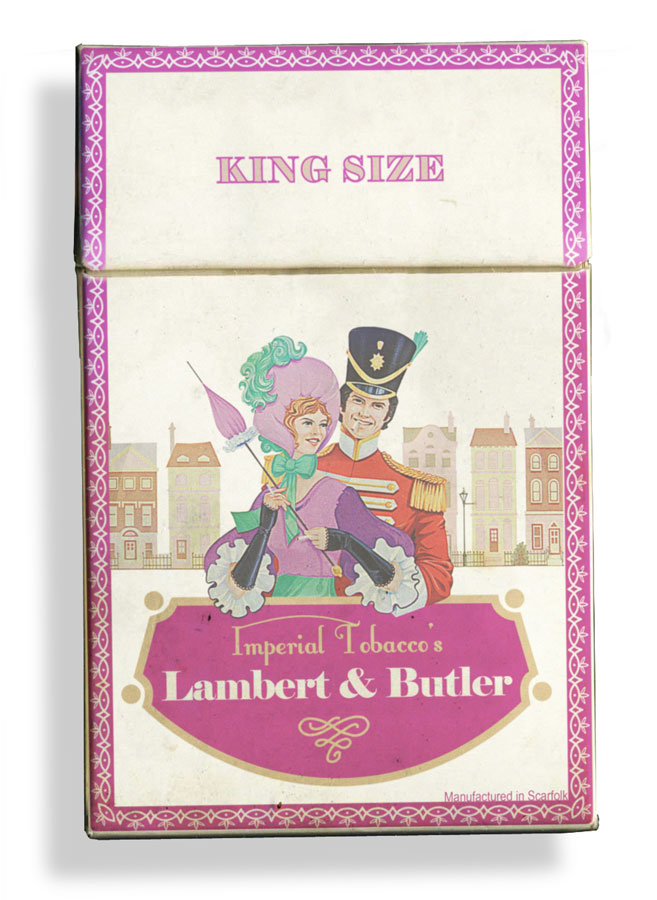
As part of its decade-long Cigaretiquette campaign (see here), Scarfolk council wanted children to start smoking cigarettes, cigars and pipes as young as possible.

The council's first attempt to sell candy cigarette sticks (sometimes in faux tobacco-branded packaging) hadn't appealed to Scarfolk children and the council was forced to revise its approach.

It did so by simply reversing the concept: Real cigarettes were now packaged as familiar, desirable confectionery (see right & below) and then mixed in among genuine chocolates, sweets and other products containing experimental, addictive, psychotropic temperament modifiers.

Additionally, the council funded a 1979 big-budget remake of 'Charlie and the Chocolate Factory', renamed 'Toby and the Tobacco Factory'. As in the original, the hero, Toby Bucketkicker, eventually becomes the owner of the tobacco factory, though in the update only after the factory's owner dies of a respiratory illness. In the musical sequel, Toby also goes on to intimidate governments and falsify medical research to feed his own rapacity.


Confectionery companies didn't like children cutting down on chocolate. They strongly opposed the substitutions, particularly because, as was later revealed, they had invested heavily in the Cavalier Pharmaceutical Company, which had been stockpiling insulin for several years to raise its value.

By the end of the decade, the council's scheme paid off and juvenile smoking was up 68%, generating a huge tax revenue.


Friday, 3 April 2015

Rabies Easter Egg Packaging (1979)


This post is part one of two about confectionery.

By the late 1970s, vaccine injections increased to 9 times daily with 12 on Sundays and public holidays. While children raised in Scarfolk's stationery and office-supply cult looked forward to their inoculations against pernicious diseases such as rabies, tetanus and altruism, heretical children were prone to rebel. Parents had to be cunning and find new ways of ensuring that their children, and the children they had borrowed without permission, honoured their legally-binding medical obligations.

Parents worked closely with the Notional Health Service and confectionery manufacturers to create booby-trapped items, such as ice-creams, Christmas puddings and Easter eggs, as can be seen above. Hidden inside each sugary treat was a spring-loaded hypodermic needle primed to deliver its medicinal load.

Unfortunately, the scheme backfired. A vaccine works by exposing the patient to a small dose of the virus or disease, but the NHS had not taken into account the greed of children, who were eating so many sweets that they not only developed full-blown diseases such as rabies, but they were also becoming too large to fit comfortably on civic sacrifical altars.


Happy Ä’ostre from Scarfolk Council.

Thursday, 4 December 2014

'Deformed Anonymous Infant Demon' model kit (1977)

In the 1970s there was a plethora of plastic model kits for children to construct and paint: ships, planes, space rockets, as well as favourite characters from children's stories such as Peter Pan, Humpty Dumpty and Idi Amin.


The most desired model kits were those based on popular childrens' television programmes, one of which was a show called Deformed Anonymous Infant Demon, or DAID for short.

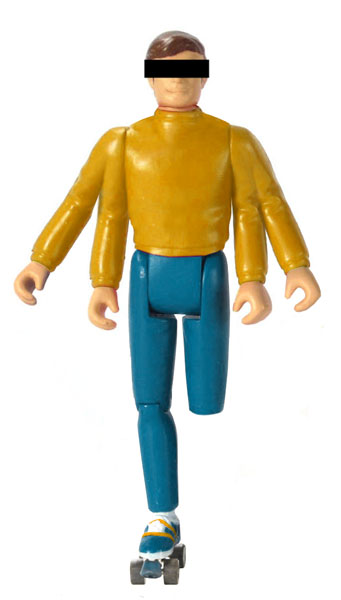
DAID was a crime-fighting eight year old with a difference. He had 4 arms and one leg because his psychic mother had smoked and drank during trances while she was pregnant. For some reason, this also made DAID a demon.

Because he wore a roller skate on his only foot, he found it very difficult to propel himself forward without assistance; however, he did have a special power: Devil Jam, which he smeared over his foes. The sticky, supernatural substance also afforded him the ability to communicate with the ghosts of consumed plums, which reluctantly acted as informers during his investigations.

DAID was also accompanied by a sidekick: the reincarnation of his dead sister who, due to a radioactive occult mishap, had come back as a pork chop. She went by the name Sibling Chop, though her real name was Julie. Together they solved crimes and offered culinary advice to the under 10s.

Deformed Anonymous Infant Demon ran for two series between 1977-78.

Wednesday, 5 November 2014

"Terrorist Tingle" Firework (Bonfire Night Part 2)

Provoking acts of terror has always been a national pastime. In November 1605 Guy Fawkes, after much conspiring and careful planning, very almost blew up Parliament. Throughout the 1970s this historical moment was celebrated annually to demonstrate to children just how much one can achieve if one puts one's mind to it.

In 1970s Scarfolk, young terrorism enthusiasts could apply for state funding for their amateur acts of terror. If their applications were successful they were permitted to attend a council course, which furnished them with rudiments such as car bombing, hijacking and guerilla-style complaining.

They were also taught how to make their own balaclavas using the knitting pattern and free knitting needles which were included in a 1976 edition of Pretty Girl Weekly, an issue which sold out 3 times over in Belfast.

Below is a 'Terrorist Tingle' firework casing from 1978.

Wednesday, 24 September 2014

"Scarbrand Pie Filling" Food Scare (1975)

At harvest time in Scarfolk, families donated food, household items and other objects they were going to dispose of anyway, to people who were too lazy to go shopping themselves. Canned products were most often donated (because they are easier to throw), but that ceased in the mid-70s following a food scare.

Tests on Scarbrand's meat-flavoured pie fillings had shown that each can might contain up to 7% ergot-impregnated stoat faeces, which had most likely leaked from a farm that specially bred animals and children for pagan rituals.

Scarbrand admitted culpability but did not recall their products. They maintained that most customers weren't qualified or even clever enough to notice the contamination because the genuine, non-faecal ingredients were so similar in colour, texture and odour to the faeces that they were virtually indistinguishable.
Secondly, the hallucinogenic ergot content was so high that the vast majority of affected customers would not be able to remember their name, or even that they were human, much less complain about the pie filling.

Scarbrand's public relations director publicly ate stoat faeces to demonstrate that it would not have any adverse effects. However, when he and several consumers fell ill and hijacked a garden centre which they tried to drive to the Lake District, Scarbrand relented and advised consumers to discard the questionable 7% of their pie fillings. They even incorporated the message into their TV ad campaigns.
"Only greedy people eat ALL their food. Scientists have proven that eating more than 93% of your food could affect your health".

By the end of the 1970s, with no improvement in consumer health, Scarbrand was forced to provide the ergot-laced stoat faeces in a separate sachet.


Click to enlarge

Sunday, 20 July 2014

"Severed Up" Psychic Advertising (1978)

In the late 1970s the police were struggling to solve several brutal crimes.

They turned to two Scarfolk psychics, Terry and Jasmine Oiltoad, a married couple who also ran a thriving advertising agency with a unique, supernatural selling point: Terry and Jasmine could psychically channel the victims of crimes, but only, strangely, if product placement was incorporated into their trances.

Deep in a clairvoyant daze, they would strategise national marketing campaigns, design advertising mock-ups for print, write product slogans, and even design storyboards for TV commercials. Psychic clues would somehow filter through Terry and Jasmine's subconscious into the promotional material.

Only when the campaigns were officially launched could Terry and Jasmine snap out of their trances and furnish the police with tangible details, such as the precise location of a murder or kidnap victim.

The advertisements themselves were littered with cryptic clues, as can be seen from the magazine ad below for Severed Up soft drinks. The razor logo and copy in this psychic-advertisement eventually led to the apprehension of a criminal known as the "Fizzy Razorblade Killer," though her real name was Helen Cradle, a 7 year old pupil from Scarfolk Infant School, who was also a known embezzler and quite good at geography and maths.

Psychic advertising was outlawed in 1979 when three major corporations were found to have ordered several murders in an effort to be included in popular psychic advertising campaigns.

Friday, 23 May 2014

"Martyr Maid" Ice Cream (1970s)

In the 1970s, arcane cults and religious orders secretly funded multinational corporations with the goal of illicitly proselytising or brainwashing. Though the cults often targeted children via products such as toys and confectionery, including ice cream, as can be seen from the image below, adult virgins were also in great demand.

The aim was to subliminally indoctrinate a person over many years, so that by the time they came of age and were ready to be recruited, a cult's beliefs and rituals would not appear inappropriate, dangerous or even fatal.

This was especially true for people who were designated to become sacrifices to spirit deities, of which there were many in Scarfolk. One particularly insatiable deity was Rupert, a Robot Penguin Lord, who consumed so many sacrifices between 1970 and 1975 that he developed diabetes and put on so much weight that he had to completely replace his wardrobe.


Monday, 9 December 2013

The "Rem-Exec 1" remote execution system

In the 1970s children were encouraged to take part in and experience all areas of civic life. In addition to compulsory youth clubs, which taught children surveillance skills and how to use them on neighbours and family members, older children were expected to take part in judicial proceedings.

Once a judge had sentenced a criminal in one of Scarfolk's many impromptu mobile courts, local children were expected to help carry out the sentence. They might assist by testing a noose's integrity, filling a hypodermic needle for a lethal injection or polishing the instruments of a masked council 'punisher.' Child executioners were chosen from school reports, much like jury duty.

Later in the decade, parents complained that such activities were too time consuming and got in the way of more important activities such as watching television, which is why Microharsh, a budding computer company, invented the REM-EXEC 1 (The Remote Executioner), a computer system that enabled children to carry out a death penalty from the comfort of their own homes.

The REM-EXEC 1 became so popular that children even began coding their own basic punishment programmes. One well-known one called 'Insert: Explosive Suppository Frog' made 10 year old Stephen Steel a household name.