
Scarfolk is a town in North West England that did not progress beyond 1979. Instead, the entire decade of the 1970s loops ad infinitum. Here in Scarfolk, pagan rituals blend seamlessly with science; hauntology is a compulsory subject at school, and everyone must be in bed by 8pm because they are perpetually running a slight fever. "Visit Scarfolk today. Our number one priority is keeping rabies at bay." For more information please reread.
Showing posts with label healthcare. Show all posts
Showing posts with label healthcare. Show all posts
Wednesday, 27 January 2021

Friday, 2 March 2018
Illegal Resurrections (1974)

A 1973 county survey showed that, after all deaths and births had been accounted for, there was a surplus of citizens, approximately 665 in total.
This was due to the practice of inserting deceased people's hearts into inanimate objects to bring them back to life. Grieving family members were most likely to attempt the process but there were also a few hobbyists and human traffickers.
Once the heart had been placed in its new host body, over which a medi-legal incantation had been recited, the object would become imbued with the personality of the deceased. However, there were often side effects, for example not being able to say certain words such as 'artichoke', 'help' and 'please kill me, I did not give my consent for this', to name but a few.
Hearts were usually placed inside humanoid objects: dolls, mannequins, large soft toys and the like, though one widow had her dead husband's heart inserted into a guinea pig called Jonathan who flushed himself down the toilet after his application to do an MA course in Linguistics was rejected.
See also: illegal ventriloquism, living toys, Mr Liver Head, organ tax, recycling surgical waste.
Friday, 8 September 2017
Laissez–faire Childcare (1978)

In 1978, Scarfolk Health Council launched a campaign which exploited people's fear of children (especially those with uncontrolled supernatural powers), to normalise the idea of letting kids do whatever they want without censure.
It was no accident that the infants in the campaign's various posters were depicted smoking, drinking and licking chocolate-covered asbestos.
A 1979 magazine interview revealed that the campaign had been privately funded by Mrs Bottomlip, a pensioner who worked in the local cancer charity shop on Scarfolk High Street. Her reasons were largely personal. Apart from the fact that she enjoyed her part-time job and "wouldn't ever want it to end because one meets such lovely people and it gets me out of the house", her son worked for a cancer research institute. Mrs Bottomlip was concerned that he, along with a whole generation of scientists and support staff, could find themselves out of work unless the number of people developing cancer was maintained, or preferably raised.
For her support of cancer research, the institute presented her with an award, which, unbeknownst to science at the time, was made from highly carcinogenic materials.
Friday, 4 August 2017
The Gullibility Campaign (1976)

In 1976, the government informed citizens that gullibility was a contagious disease. The Dept. of Health warned that it was spread through the handling of so-called 'clever books' or by talking to people who were not approved by the state. Libraries, bookshops and schools closed overnight.
The department also disseminated the notion that gullibility could be inadvertently caught by coming into contact with airborne ideas. People were told to stay at home. One leaflet read: "All the information you will ever need will be presented to you via the state-controlled newspaper The Scarfolk Mail and the one and only state-run TV channel, which is decontaminated daily."
When the Dept. of Health realised just how successful the campaign was, it added that gullibility also led sufferers to forget serious crimes they had previously committed. This permitted the council to impose hefty fines and other arbitrary punishments (see poster above).
Thursday, 6 April 2017
"Diseases are cool!"

In the 1970s, the Notional Health Service envied those public sectors that received more funding from the government. The NHS was particularly resentful of the Department of Education & Indoctrination and in 1977 it set out to entice children away from schools and state-run brainwashing covens into hospitals so that it could justify larger budget requests.
The NHS initially launched a major campaign aimed at children and teens, which promoted the health benefits of serious medical diseases and conditions, especially those which required substantial financial resources. In addition to adverts in magazines such as Look-In (see above), it also produced collectable bubble-gum cards (see below), badges, T-shirts and cuddly toys that resembled bacterial cells and viruses.
While the idea of being dangerously sick did become very popular among the nation's school children (indeed, the Staphylococcus aureus flesh-eating disease playset was the biggest seller of Christmas 1978), it still wasn't enough to attract the desired funding to the health sector and in 1978 the NHS took the inevitable step of directly infecting its merchandise with actual diseases to ensure success.


Friday, 10 February 2017
"Fun Fag Facts" (1974)

This info-tisement appeared in children's weekly magazines and on the walls of schools as part of the 1974 "Cigaretiquette campaign". It was funded in part by the SCRG (Scarfolk Cancer Research Group) who, having accidentally hired too many employees and purchased expensive premises, desperately needed a sharp increase in the numbers of cancer patients to attract the funding they required to maintain their organisation.
See also: confectionery-branded cigarettes of the 1970s.
Saturday, 24 September 2016
"Positive Outlook? Look Out!" (1976)

In the hot summer of 1976, people were enjoying the rare sunshine and the opportunity to socialise, sometimes even with foreigners. Scarfolk Council became concerned that its citizens were developing something akin to happiness, which it considered a destabilising threat to its authority.
Government operatives illicitly carried out false-flag acts of terror in an attempt to discourage positivity and regain control, but Scarfolk citizens were undeterred.
Fearing that this pandemic of cheerfulness was a prelude to social breakdown, perhaps even leading to revolution, the government quickly passed a health bill to formally recategorise "psychological states such as contentment, gratification and satisfaction" as mental illnesses "as dangerous in their effects as diseases such as rabies".
The above poster, which played on deep-seated personal doubts, appeared on the walls of cafes and restaurants, leisure centres and in other locations where people might be at risk of enjoying themselves or becoming contaminated by peace-of-mind
Friday, 16 September 2016
Death is Like a Happy Balloon (1973)

Death is Like a Happy Balloon by Dr Cassandra Henge was one in series of books published by Bullyrag Books who specialised in introducing children to alarming topics without alleviating any of their readers' fears. Other books in the series included Totalitarianism is Like a Merry Smile, Slaughterhouses are Like a Paddling Pool and Organ Failure is Like Fudge.


The state carefully chose the word (a neologism, unrepeatable here for legal reasons), so that it would not trigger an unintended suicide epidemic.
In 1975, however, a UN human rights inspector was sent to the UK to interview alleged victims of state brutality. His foreign name by chance matched the trigger word and thousands took their lives following a television broadcast about his visit.
It was later revealed that the government had specifically requested the inspector by name. Additionally, it had total control over the broadcast's contents and when it was aired to ensure that it reached the maximum number of viewers.


Thursday, 28 April 2016
British Gas Austerity Advert (1978-1979)

In 1978 the government faced budgetary problems on all fronts. The NHS, for example, risked collapse following an all-out doctors' strike, which had been triggered by the health secretary's insistence that doctors continue to work after they die and attend to patients via séance.
Desperate to reduce the numbers of patients straining NHS resources, the health secretary eventually struck upon an idea that would allow him to kill at least two birds with one stone.
British Gas was in the process of being privatised and the health secretary had a controlling financial interest in the company that was being groomed to acquire ownership. The health secretary lobbied for a short-term reduction in the cost of coal gas, particularly in areas of high unemployment, and promoted it as an aid to health akin to mountain or sea air.
He also had a hand in secretly funding a BBC "Play for Today" drama called "Noble Gas for Noble Gary" which extolled the virtues of a sick, working-class man who, along with several out-of-work comrades, commits suicide by putting his head in an unlit gas oven so as not to burden society. The men were portrayed as heroes to be emulated.
The health secretary's ideas became conflated in the public mind and by 1979 suicide by gas became an unlikely health fad spawning an array of books, cassettes and evening classes, all of which were produced by a company in which the healthy secretary also had shares.
Thursday, 24 March 2016
Charlie Barn
Charlie Barn was a paranormal, spider-like entity discovered in the vast, labyrinthine bunker beneath the Scarfolk council office building. He employed mind-control techniques to trick people into making him famous and was a regular guest on British TV throughout the 1970s. He appeared in children's programmes such as Blue Peter and as a cartoon character in Paddington (see below). He also hosted his own show, Barn's Owls, which saw him hunt, disembowel and eat large owls (later revealed to be orphans dressed as owls) in front of a live studio audience.


In 1973 he set up various fake charities which gave him access to schools and hospitals where he would illicitly lay eggs in the heads of children in a bid to populate the world with his unnatural progeny. How he got away with his sickening actions for so many years beggars belief.

He probably avoided detection by hiding in plain sight: he appeared in a series of public information films and published books which warned the public about the dangers of arachnoid demons such as him.
Since 1979, all forms of evil spirits have been banned from consuming minors on public property and/or for the entertainment of a paying audience.

Spider legs by sankax


In 1973 he set up various fake charities which gave him access to schools and hospitals where he would illicitly lay eggs in the heads of children in a bid to populate the world with his unnatural progeny. How he got away with his sickening actions for so many years beggars belief.

He probably avoided detection by hiding in plain sight: he appeared in a series of public information films and published books which warned the public about the dangers of arachnoid demons such as him.
Since 1979, all forms of evil spirits have been banned from consuming minors on public property and/or for the entertainment of a paying audience.

Spider legs by sankax
Thursday, 10 March 2016
Welfare Recipient Targets (1971-1979)

In 1971 it became compulsory for welfare recipients to sew targets onto their clothing so that they could be identified in public at all times. The minister for social services rejected claims that the target invited personal attacks, sidestepping the fact that the government had concurrently increased its funding of archery classes for newly released criminal sociopaths as part of their reintegration into society.
Despite these developments, the number of people claiming welfare tripled by 1973, in part because many families had lost one or more breadwinners to arrow-related injuries. The government, desperate to reduce spending, began promoting the idea that less dependent members of society involved in "crimes against target wearers" should be exempted from legal proceedings. In fact, they were rewarded. For example, points on drunk drivers’ licenses were removed following accidents which produced fatalities within the boundaries of large council estates.
There were also several instances of fully-armed Alvis FV101 Scorpion tanks, with the keys in their ignitions, inexplicably left by the army on the driveways of decent, middle-class citizens who neighboured built-up social housing areas.
Monday, 5 October 2015
Personal Space Allowance (1975)

Until 1975, the standard PSA (Personal Space Allowance) had always been fixed at a comfortable, civilised 20 inch zone around each citizen. The government suddenly amended this, however, citing terrorism and a rising population as reasons to cut personal space along with other social benefits and civil liberties.
The PSA was more than merely reduced: The new bodily zone into which representatives of the state (and even some commercial organisations) were now free to pass was amended to minus 5.2 inches. Naturally, this made human bodies 'semi-permeable', legally speaking, and for many people only the depths of their intestines remained private.
Police, security and social services enthusiastically exploited the new laws, as did the health service which randomly pilfered internal organs from unsuspecting citizens, claiming quite lawfully that they were found in 'communal public places'. The nervous public caught on and by 1977 there were self-help groups springing up all over Scarfolk which helped citizens become as obese as possible in an effort to protect their innermost parts from state interference and even commercial exploitation.
Friday, 21 August 2015
NHS Health Warning Poster (1978)

In 1978 the Notional Health Service was struggling to cope with its lack of funds. Overspending was unavoidable and the threat of closure was ever present. However, Scarfolk Council's department for health and knitting hit upon a simple method to radically reduce spending.
Firstly, taking its lead from a household insurance policy, the council recategorised many serious (thus expensive) illnesses as ineligible for treatment. Cases were dismissed due to "general wear and tear" or "acts of god", and the council even went as far as to recommend that patients with serious physical ailments "contact the manufacturer for further assistance". Secondly, the spread of disease in hospitals was cut by 90% by removing and prohibiting sick patients.
Patients with cheaper, non-threatening conditions were admitted to NHS hospitals, but only if they understood that they might share a bed with up to 9 other patients and/or a startup business that had rented the bed as office space. Patients were also subjected to virtually costless placebo trials. In fact, all treatments in 1979 were placebos consisting of either sherbert infusions (the town mayor was a major stakeholder in a Scarfolk confectionery factory) or daily rituals conducted by a coven of witches, who chanted in hospital car parks around an effigy of a nature deity made from balloons.
The cost-cutting scheme was successful and other regions adopted the same model. Not treating people was the only way to keep the NHS a viable, going concern, permitting it to continue what it has always done best: treat people.
Thursday, 28 May 2015
Expiration Cards (1970s)
"Have you ever worried about how and when you might pass away? With an Expiration Card you needn't worry ever again..." (From a 1971 Scarfolk information booklet).


As of 1970 all residents of Scarfolk were issued with Expiration Cards. A dedicated council department, run by someone known only as Tod XIII, calculated when each citizen was most likely to become an 'unreasonable imposition' on society, then set an official date and method of demise. Sometimes, the date was brought forward if the citizen's circumstances changed: for example, if a person had become undeservedly depressed or poorly and was unlikely to ever again be gainfully employed by any self-respecting organisation.
Each cardholder was expected to make the relevant preparations according to their allocated death event and to pay for it. Costs were taken directly out of citizens' income along with tax and costs incurred by governmental weekend breaks abroad. Unemployed cardholders had their assets and/or family members seized and auctioned off.
If a cardholder inconveniently died before their scheduled date and time, their card (and a hefty admin fee) was inherited by the next of kin who could either swap the card with their own - if the death event was preferred - or donate it to Scarfolk's Expiration Charity, which brought together poverty-stricken people to perish in the same event so that they may share costs. Charity expirations often took the form of driving a decommissioned double-decker bus off a pier into the sea while a brass band played. These expirations were televised on SBC TV's 'Beneviolence' programme, particularly if they featured once-popular celebrities who had fallen on hard times.
Note: Personalised Expiration Cards may be available for purchase in the future.
Thursday, 9 April 2015
Confectionery-Branded Cigarettes (1970s)
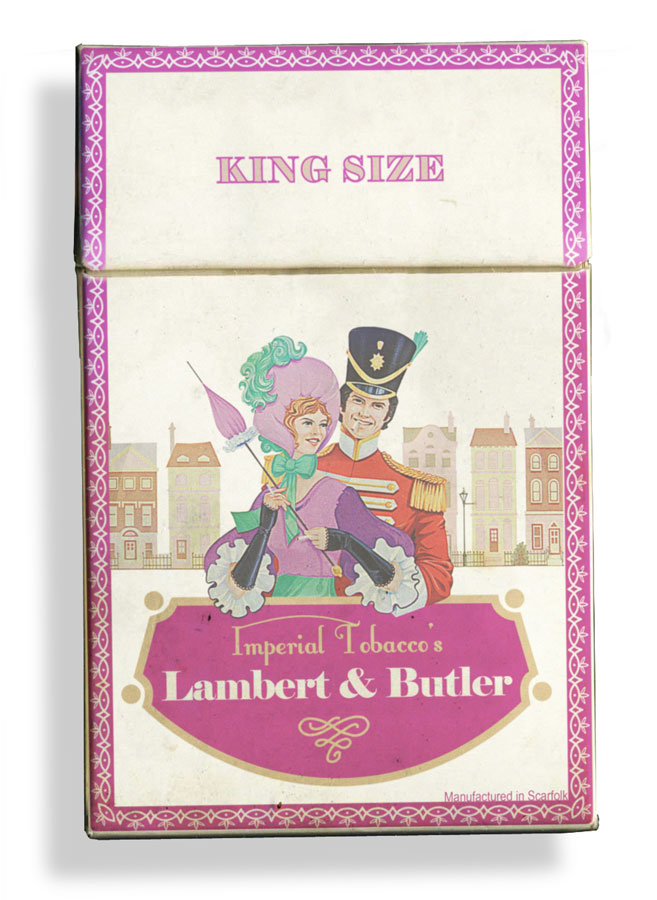 As part of its decade-long Cigaretiquette campaign (see here), Scarfolk council wanted children to start smoking cigarettes, cigars and pipes as young as possible.
The council's first attempt to sell candy cigarette sticks (sometimes in faux tobacco-branded packaging) hadn't appealed to Scarfolk children and the council was forced to revise its approach.
It did so by simply reversing the concept: Real cigarettes were now packaged as familiar, desirable confectionery (see right & below) and then mixed in among genuine chocolates, sweets and other products containing experimental, addictive, psychotropic temperament modifiers.
Additionally, the council funded a 1979 big-budget remake of 'Charlie and the Chocolate Factory', renamed 'Toby and the Tobacco Factory'. As in the original, the hero, Toby Bucketkicker, eventually becomes the owner of the tobacco factory, though in the update only after the factory's owner dies of a respiratory illness. In the musical sequel, Toby also goes on to intimidate governments and falsify medical research to feed his own rapacity.

Confectionery companies didn't like children cutting down on chocolate. They strongly opposed the substitutions, particularly because, as was later revealed, they had invested heavily in the Cavalier Pharmaceutical Company, which had been stockpiling insulin for several years to raise its value.
By the end of the decade, the council's scheme paid off and juvenile smoking was up 68%, generating a huge tax revenue.


Friday, 3 April 2015
Rabies Easter Egg Packaging (1979)

This post is part one of two about confectionery.
By the late 1970s, vaccine injections increased to 9 times daily with 12 on Sundays and public holidays. While children raised in Scarfolk's stationery and office-supply cult looked forward to their inoculations against pernicious diseases such as rabies, tetanus and altruism, heretical children were prone to rebel. Parents had to be cunning and find new ways of ensuring that their children, and the children they had borrowed without permission, honoured their legally-binding medical obligations.
Parents worked closely with the Notional Health Service and confectionery manufacturers to create booby-trapped items, such as ice-creams, Christmas puddings and Easter eggs, as can be seen above. Hidden inside each sugary treat was a spring-loaded hypodermic needle primed to deliver its medicinal load.
Unfortunately, the scheme backfired. A vaccine works by exposing the patient to a small dose of the virus or disease, but the NHS had not taken into account the greed of children, who were eating so many sweets that they not only developed full-blown diseases such as rabies, but they were also becoming too large to fit comfortably on civic sacrifical altars.

Happy Ēostre from Scarfolk Council.
Saturday, 14 February 2015
"Romantic Bile Awareness" (1979)

The romantic bile awareness campaign was launched on Valentine's Day, 1979. It came about following medical research into "that pernicious malady: love", which scientists believed was responsible for the secretion of a mysterious black bile produced in the hearts of the afflicted.
The bile perplexed experts, some of who claimed it to be sentient, though all agreed that it caused irreparable damage to internal organs including the lungs, kidneys and luncheon balls. But it was the brain that was the most susceptible to the bile which could trick the sufferer into demeaning acts such as befriending foreigners and other undesirables.
While the state did turn a blind eye to restrained fondness between its citizens, it could not permit love, requited or otherwise, to go unchecked. As the poster states, all relationships required authorisation from local councils and sexual proficiency was evaluated by a social worker.
In addition to relationship management, Scarfolk council also drew up a definitive list of human traits that it deemed attractive, thus potentially dangerous. Anyone who fulfilled more than three attributes was forced to attend a plastic surgery course during which they were taught self-surgery techniques and given a sterilised Swiss army penknife to ensure compliance with the government's guidelines on physical attraction.
Happy Valentine's Day from everyone at Scarfolk Council
Thursday, 13 November 2014
SIDA (Serious Infant Dental Assault)
Although there were genuine cases of children fatally biting people in 1970s Scarfolk*, historians now believe that there were far fewer incidents than was originally thought.
It is now believed that the government exploited the widespread fear of SIDA (Serious Infant Dental Assault) simply to silence children. The state had spent millions of pounds indoctrinating adults into accepting its prescribed view of reality, but children, who were yet to be intellectually and emotionally conditioned, were prone to asking questions. Even a simple enquiry could undermine an adult's strictly-controlled psychological servitude and set him back years.
Children up to the age of seven had to wear a muzzle, which was provided by the Notional Health Service, and when they were old enough they were fitted with special safety dentures which were made from lead. So heavy were these dental implants that children found it virtually impossible to open their mouths, restricting them to only uttering a word or two.
The scheme backfired when a group of muted children naturally developed telepathic abilities and tricked the county's dentists and orthodontists into boarding a mysterious black bus, which was never seen again.

*In 1971 six year old Kimberley Twix accidentally ate two members of her family, a social worker and the arm of a special forces soldier who was dispatched to contain the hungry child.
It is now believed that the government exploited the widespread fear of SIDA (Serious Infant Dental Assault) simply to silence children. The state had spent millions of pounds indoctrinating adults into accepting its prescribed view of reality, but children, who were yet to be intellectually and emotionally conditioned, were prone to asking questions. Even a simple enquiry could undermine an adult's strictly-controlled psychological servitude and set him back years.
Children up to the age of seven had to wear a muzzle, which was provided by the Notional Health Service, and when they were old enough they were fitted with special safety dentures which were made from lead. So heavy were these dental implants that children found it virtually impossible to open their mouths, restricting them to only uttering a word or two.
The scheme backfired when a group of muted children naturally developed telepathic abilities and tricked the county's dentists and orthodontists into boarding a mysterious black bus, which was never seen again.

*In 1971 six year old Kimberley Twix accidentally ate two members of her family, a social worker and the arm of a special forces soldier who was dispatched to contain the hungry child.
Friday, 10 October 2014
"Inhale for Britain" (1974)
In the 1970s a government think-tank headed by Scarfolk councillor E. Bernays predicted that 21st century Britain might see a much-increased elderly population. Already faced with a recession, the government decided on a two-pronged solution that would not only reduce the numbers of future senior citizens but also boost the economy.
It strongly encouraged people, especially children, to smoke and then, once addiction had become more widespread, the tax on cigarettes was raised. The short-term plan was to bolster the economy with the tobacco levy and, in the long term, drastically reduce the number of people reaching pensionable age by ensuring they develop fatal, smoking-related illnesses.
To further secure economic stability the government also began slowly dismantling the NHS (Notional Health Service) so that it could not be made financially accountable for any pensioners who accidentally slipped through the net and stubbornly endured.
The poster below from 1974, which was aimed at impoverished children, took advantage of the national pride and sense of 'Britishness' which had been fabricated by an earlier government propaganda campaign intended to control the uneducated.

Find out how this campaign developed with confectionery branded cigarettes.
It strongly encouraged people, especially children, to smoke and then, once addiction had become more widespread, the tax on cigarettes was raised. The short-term plan was to bolster the economy with the tobacco levy and, in the long term, drastically reduce the number of people reaching pensionable age by ensuring they develop fatal, smoking-related illnesses.
To further secure economic stability the government also began slowly dismantling the NHS (Notional Health Service) so that it could not be made financially accountable for any pensioners who accidentally slipped through the net and stubbornly endured.
The poster below from 1974, which was aimed at impoverished children, took advantage of the national pride and sense of 'Britishness' which had been fabricated by an earlier government propaganda campaign intended to control the uneducated.
Wednesday, 10 September 2014
'Hand Amnesty' (1972)
You may recall that we recently touched on crime in Scarfolk. One ubiquitous problem was 'subconscious crime', which was so prevalent in the 1970s that the council was forced to take drastic measures. Although it had complete faith in the integrity and innocence of it citizens, the council did not trust their hands. What were the town's approx. 80,000 hands doing and who were they talking to? There was no way of effectively monitoring or policing the situation.
That's why in 1972 the council offered its first Hand Amnesty and announced that no legal action would be taken against citizens if they turned in their hands to the police. A week before the amnesty date, each home received through the post a parcel containing a local anaesthetic, a miniature hacksaw (or sharp spoon, for working class families) and a raspberry lolly (as an incentive to carry out the necessary procedure).
However, many citizens were confused. If their hands had committed crimes without them being aware of it, how would they know if they were guilty or not? The average person had neither the time nor the resources to systematically surveil their own hands.
Council guidelines suggested the following:
1. If you are already conscious of your subconscious crime please take advantage of the amnesty and surrender your hands to the police.
2. If you do not recall committing a crime, it is likely that your conscious mind is suppressing the memory of committing a crime. Please take advantage of the amnesty and surrender your hands to the police.
If you fail to comply with either 1. or 2. you will be visited by council surgeons.
They are on hand 24 hours a day to give you a hand handing in your hands.

That's why in 1972 the council offered its first Hand Amnesty and announced that no legal action would be taken against citizens if they turned in their hands to the police. A week before the amnesty date, each home received through the post a parcel containing a local anaesthetic, a miniature hacksaw (or sharp spoon, for working class families) and a raspberry lolly (as an incentive to carry out the necessary procedure).
However, many citizens were confused. If their hands had committed crimes without them being aware of it, how would they know if they were guilty or not? The average person had neither the time nor the resources to systematically surveil their own hands.
Council guidelines suggested the following:
1. If you are already conscious of your subconscious crime please take advantage of the amnesty and surrender your hands to the police.
2. If you do not recall committing a crime, it is likely that your conscious mind is suppressing the memory of committing a crime. Please take advantage of the amnesty and surrender your hands to the police.
If you fail to comply with either 1. or 2. you will be visited by council surgeons.
They are on hand 24 hours a day to give you a hand handing in your hands.
Subscribe to:
Posts (Atom)