Showing posts with label Hauntology. Show all posts

Monday, 18 February 2019

The Scarfolk Annual 197X


The Scarfolk Annual 197X. 

17.10.2019 (UK) 10.29.2019 (US).
Pre-order: Amazon (http://bit.ly/scarfolkbook), Hive, Waterstones, The Guardian Bookshop, Foyles, Wordery, Blackwells, Forbidden Planet, Barnes & Noble, Books-A-Million & others. 
For more information please reread.

SPECIAL OFFER:
 Pre-order NOW and receive the copy you ordered when it comes out.

For more information please reread.

Friday, 2 March 2018

Illegal Resurrections (1974)


A 1973 county survey showed that, after all deaths and births had been accounted for, there was a surplus of citizens, approximately 665 in total.

This was due to the practice of inserting deceased people's hearts into inanimate objects to bring them back to life. Grieving family members were most likely to attempt the process but there were also a few hobbyists and human traffickers.

Once the heart had been placed in its new host body, over which a medi-legal incantation had been recited, the object would become imbued with the personality of the deceased. However, there were often side effects, for example not being able to say certain words such as 'artichoke', 'help' and 'please kill me, I did not give my consent for this', to name but a few.

Hearts were usually placed inside humanoid objects: dolls, mannequins, large soft toys and the like, though one widow had her dead husband's heart inserted into a guinea pig called Jonathan who flushed himself down the toilet after his application to do an MA course in Linguistics was rejected.

See also: illegal ventriloquism, living toys, Mr Liver Head, organ tax, recycling surgical waste.

Thursday, 8 February 2018

Amateur Execution Allowance


Though pushing people off buildings was all the rage in 1970s Scarfolk, it was quite damaging to concrete paving. Hundreds of paving slabs had to be replaced in 1974 alone, at an estimated cost of £35.

With some of the most at-risk slabs dating as far back as the early 1970s, a local charity called SPLAT (Society for Pavement Liberation from Amateur Terminations) dedicated itself to the protection of paving slabs and their heritage in general.

Though the charity raised awareness, it had little impact on the number of people impacting the valuable concrete from great heights.

The charity lobbied the council which eventually agreed to regulate the amount of people that could be hurled from tall buildings (see poster above).

Paving slab damage was reduced by 25%, but the problem transferred to locomotives, specifically their paintwork, which was at risk of chipping after  pushing people in front of trains became the new, preferred method of amateur execution.

See also: Living cement and concrete pornography.

Thursday, 25 January 2018

Illegal Puppetry & Ventriloquism


By 1977 the numbers of puppeteers and ventriloquists roaming Scarfolk's sewers had reached crisis point.

Initially, they had claimed their sole intention was to entertain the many outcast citizens who had been ordered by the courts to live out their remaining days in the sewer system beneath Scarfolk's streets. It became apparent, however, that the ventriloquist's real motives were far less salubrious.

In the maze of subterranean concrete tunnels they lured people with sweets, toys and other gifts and abducted them. Then, through a complex process of mummification which permitted the subject to forever retain partial consciousness, the abductees were turned into so-called 'breathing dummies' destined for the northern, illegal club circuit where 'haunted ventriloquism' had become popular.

Though haunted ventriloquism conversions were outlawed in entertainment, they continued to be applied in politics for many more years.

Tuesday, 31 October 2017

The Ritual & Decorative Arson Newsletter (1972)


The Ritual & Decorative Arson Newsletter was published between 1970 and 1976. Its editor was Trevor Vestige who also managed the petrol station where Joe and Oliver Bush disappeared in 1970 (see Discovering Scarfolk for more details).

This copy was banned by the council after marauding children wearing ceremonial masks torched and laid waste to half of Scarfolk on Halloween, 1972. Despite the ban, the council torched the other half of the town the following spring because it "looked uneven".

Because the public information office had burned down citizens weren't warned and many perished in the flames. Grieving family members, however, were compensated with splendid, top-of-the-range trowel and funerary urn sets.

Happy Halloween from everyone at Scarfolk Council.

Friday, 13 January 2017

Minor Meat Cuts Poster (1973)


An excerpt from a 1973 speech by Scarfolk's Minister for Family Welfare and Catering:

"In times of economic crisis, cuts are inevitable. We feel, however, that the citizens of Scarfolk should be directly involved in the process of how these cuts are implemented and that is why every household will soon receive a booklet describing all the cuts we currently recommend..."

Two weeks after the speech, thousands of poor families received Charcuterie for Beginners, which contained several pull-out posters, one of which is presented above.

More food-related austerity solutions from 1973 see HERE and HERE.

Friday, 23 December 2016

Radio Times Christmas Issue

Everyone at Scarfolk Council wishes you a very merry final Christmas before the inevitable apocalypse.

Here's your festive double issue of the Radio Times, which covers Christmas to the new year (or the end of time, whichever comes first.)


Learn more about the jolly apocalypse HERE.

Thursday, 15 December 2016

Disposable Children Bags


Discarded children were a serious problem in 1970s Scarfolk. Adults who had decided against parenthood, whether for reasons of finance or boredom, would dump their offspring in sacks by roadsides or in laybys.

Hungry children who had not been given the required sedative dosages often chewed their way out of the sacks and wandered into speeding traffic. Not only did these unwanted children cause hours of unnecessary delays to motorists, but a study showed that discarded children were responsible for close to a million pounds worth of damage to car bonnets, bumpers and windscreens in 1974 alone.

From January 1975, any 'Bag Baby' (as they came to be known) involved in a road accident that incurred costs to motorists, risked a fine of up to £125.

Thursday, 8 December 2016

BBC Sound Effects Records (early 1970s)

In the early 1970s, the BBC produced numerous sound effects records. Though many were created for educational purposes, such as 'Squeaky Eyeballs' (1973), the public were encouraged to utilise the more practical releases in their daily lives.
Expressing emotion or personal thoughts in both private and public had long been outlawed. Records such as 'British Tutting' (1970) allowed the disgruntled listener to listen to a variety of legally sanctioned tuts as a sort of surrogate expression of displeasure. Equally, 'Inconsolable Weeping in Libraries' was a soothing, lawful substitute for the act itself.
As familial contentment was also prohibited in the 1970s (apart from at Christmas when it was compulsory. See HERE), some families, frightened that their satisfaction might be discovered and reported, opted for albums such as those from the BBC's Divorce Series, which they would play at elevated volumes for the ears of prying neighbours or passing government agents.

Not all deceptions were successful. If a family was arrested they would be taken to their local police station where, while waiting to be interrogated by specialised officers, they might be played an album such as 'Uncomfortable Silences'.


Thursday, 1 December 2016

Council Advent Cards

In 1970s Scarfolk, the council sent out personalised advent cards to all its citizens.

Not only did the cards hint cryptically at policies due to be introduced in the new year, but they were also frequently accompanied by updated citizen expiration details (see HERE).


The more observant among you may have spotted Charlie Barn on the roof.
More on advent HERE.

http://scarfolk.blogspot.de/p/cyclops-cats.html

Thursday, 10 November 2016

The "Easy as 1-2-3" Campaign


From the launch of the 'Easy as 1-2-3' campaign:

"We live in worrying times. Many residents require help but feel that they are unable to discuss with the council the social issues that affect them.

While it is true that a) we adhere to a strict policy of not answering our public helpline telephones and b) our offices cannot be approached without the aid of a mine detector, we would like to alleviate any concerns you may have.

In the coming weeks you will see posters [see above] placed in public areas around the town. Read them thoroughly. They contain all the details you need to go about your daily life. You do not require any additional information from the council. Further solicitations for help or support, even in alleged emergencies, could incur a fine of up to £500."

Saturday, 24 September 2016

"Positive Outlook? Look Out!" (1976)


In the hot summer of 1976, people were enjoying the rare sunshine and the opportunity to socialise, sometimes even with foreigners. Scarfolk Council became concerned that its citizens were developing something akin to happiness, which it considered a destabilising threat to its authority.

Government operatives illicitly carried out false-flag acts of terror in an attempt to discourage positivity and regain control, but Scarfolk citizens were undeterred.

Fearing that this pandemic of cheerfulness was a prelude to social breakdown, perhaps even leading to revolution, the government quickly passed a health bill to formally recategorise "psychological states such as contentment, gratification and satisfaction" as mental illnesses "as dangerous in their effects as diseases such as rabies".

The above poster, which played on deep-seated personal doubts, appeared on the walls of cafes and restaurants, leisure centres and in other locations where people might be at risk of enjoying themselves or becoming contaminated by peace-of-mind

Monday, 2 May 2016

May Day Celebrations


May Day is a perfect opportunity for the people of Scarfolk to rid the town of any surplus or redundant citizens. The Scarfolk Wicker Man will hold up to 100 people, with one space always reserved for the lucky winner of the compulsory town raffle.

Wednesday, 3 February 2016

The BBC Test Card Witch

(click to enlarge)

Many people recognise BBC television's test card "F". However, when it was broadcast in Scarfolk an old woman would inexplicably appear in place of the young girl as soon as parents left the room.

According to legend, if she turns to look you in the eye, you are fated to die beneath an overloaded lorry which will topple over, crushing you with its consignment of industrial safety equipment (Find out if you are cursed HERE).

Children called the woman Old Chattox and she was believed to be a 17th century witch whose spirit had been unintentionally revived and broadcast by a hilltop TV transmitting station built on the site of her execution. She frequently flouted broadcast guidelines and undermined the BBC's attempts to avoid product placement by advertising the services of a bull castrator who had been dead for nearly 400 hundred years.

Below: Photographs of Old Chattox taken by viewers between 1970 and 1978. Old Chattox wrote out demands on her blackboard, which children felt compelled to obey (top). She also drew occult or satanic symbols designed to mesmerise and indoctrinate young viewers. Some of her messages were seemingly nonsensical, though many people believed they were cryptic descriptions of future events (bottom).


Further reading:
i. Learn about Bubbles the clown and his range of possessed greetings cards.
ii. For more information about TV broadcast signal intrusions, see the 1975 We Watch You While You Sleep video.

Thursday, 2 July 2015

"Mindborstal" Psychological Detention Drug


Following the publication of Children and Hallucinogens: The Future of Discipline in 1971, several products were developed by Cavalier Pharm, Scarfolk's largest pharmaceutical company.

In addition to Panopticon, a truth serum designed for minors (see Discovering Scarfolk p.65 for further details), Cavalier Pharm also manufactured a drug called Mindborstal which, as the advertisement above indicates, induced children into a mental state that functioned as a psychological prison.

The detention hallucinations produced by the drug were so potent that they were indistinguishable from reality and children under its influence sat motionless for days and even weeks, locked in delirious trances. They were convinced that they were incarcerated within physical spaces policed by intimidating entities tailored to their own personal fears.

Yet for all of the drug's obvious benefits, it was ultimately recalled when several children were reported to have escaped on imagined giraffes, which their subconscious psyches had somehow conjured into existence. At least, that was the official explanation. Sceptics weren't convinced, even when hundreds of dead giraffes conveniently washed up on Scarfolk beach. Recently leaked documents suggest that the real reason for the recall was a desperate attempt by the council to cover up its covert plan to have the drug renamed and introduced to the town's water supply.

Thursday, 11 June 2015

"Natal Truancy" Leaflet (1974)


A 1974 study by the NCC (Natal Crime Commission) in Scarfolk discovered that 2 out of 5 pregnant women were not turning up for the birth of their own child. 

Doctors rejected the hypothesis that backstreet, occult practitioners might be responsible, but failed to solve how babies were bypassing the traditional medium of a biological mother and delivering themselves into the world.

When some of the absentee mothers were tracked down they couldn't account for their lack of attendance, though eye-witnesses placed the women in various locations at the time that they should have been giving birth: at cocktail parties, playing Bingo, watching the radio, reading grimoires in the coven library and communing naked with a black-pelted half-man, half-goat in supermarket car parks.

Children born as a result of maternal misdemeanours tended not to get along with other children, particularly because they levitated uncontrollably. Many schools were forced to enclose their grounds inside large nets or perspex domes to catch the drifting minors.

Thursday, 9 April 2015

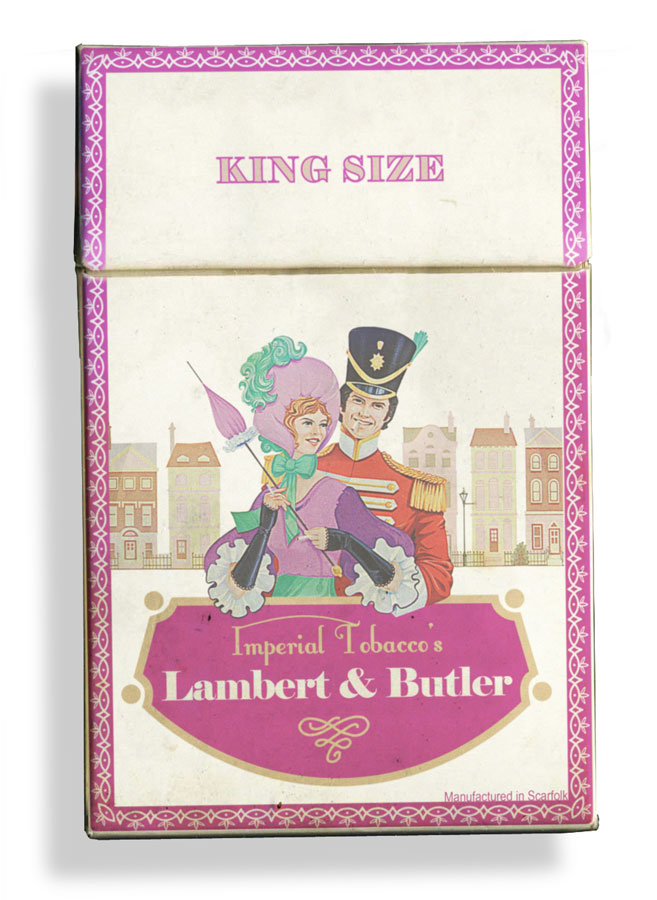
Confectionery-Branded Cigarettes (1970s)

As part of its decade-long Cigaretiquette campaign (see here), Scarfolk council wanted children to start smoking cigarettes, cigars and pipes as young as possible.

The council's first attempt to sell candy cigarette sticks (sometimes in faux tobacco-branded packaging) hadn't appealed to Scarfolk children and the council was forced to revise its approach.

It did so by simply reversing the concept: Real cigarettes were now packaged as familiar, desirable confectionery (see right & below) and then mixed in among genuine chocolates, sweets and other products containing experimental, addictive, psychotropic temperament modifiers.

Additionally, the council funded a 1979 big-budget remake of 'Charlie and the Chocolate Factory', renamed 'Toby and the Tobacco Factory'. As in the original, the hero, Toby Bucketkicker, eventually becomes the owner of the tobacco factory, though in the update only after the factory's owner dies of a respiratory illness. In the musical sequel, Toby also goes on to intimidate governments and falsify medical research to feed his own rapacity.


Confectionery companies didn't like children cutting down on chocolate. They strongly opposed the substitutions, particularly because, as was later revealed, they had invested heavily in the Cavalier Pharmaceutical Company, which had been stockpiling insulin for several years to raise its value.

By the end of the decade, the council's scheme paid off and juvenile smoking was up 68%, generating a huge tax revenue.


Thursday, 19 March 2015

Scarfolk Children's Books (1970s)

This year it's 100 years since Ladybird books were first published. Generations of children turned to these pocket-sized hardbacks for their favourite fairy tales, but not only: They read sanitised, biased accounts of history's bloodiest chapters, as well as the biographies of popular, cruel despots such as Genghis Khan, Caligula and Queen Elizabeth II. They even learned how to make useless objects from hazardous components and how to destroy imbecilic superstitions with rudimentary science.

Unfortunately, Scarfolk children were not interested in Ladybird books or the subjects that entertained and educated other British children. To meet their needs, the Scarfolk Book company created its own series of small hardback books. A selection of some of the more popular editions is below.


Thursday, 5 March 2015

"Bounce of Death" Public Information (1976)


In 1976 Scarfolk council was accused of unnecessarily endangering children's lives. In addition to placing municipal bouncy castles and trampolines in close proximity to pylons and electricity substations, the council also positioned roundabouts, swings and slides mere inches from high cliffs, busy railway tracks and motorways. 

An investigative BBC television documentary series alleged that all the recreational areas had been intentionally placed within walking distance of underfunded orphanages and schools attended by working-class children. But the council was insistent: "The placement of the playgrounds is purely coincidental. As for potential hazards, how a child interacts with recreational community equipment is the responsibility of the parent, guardian, teacher or abductor". It also launched the poster campaign, as seen above.

The matter was raised again three years later when it was revealed that the play areas, when connected by straight lines on a map, resembled an occult symbol that had long been associated with pagan child sacrifice. This time the council responded by dismantling the children's playgrounds. However, it blatantly replaced them with infant recycling centres, a move that was welcomed by those who had opposed the vast numbers of children going to waste during a period when there was a shortage of leather for ceremonial masks.

Wednesday, 25 February 2015

Pedestrian 'Bastard Lanes' (1970s)

'Bastard Lanes', as they came to be known, were devised for unwed mothers and their unclean offspring. The narrow pedestrian footpaths were identifiable by their double black lines and electrified fences which ran in the gutters of most town streets.

In these two posters, nearly a decade apart, we can see how social policy evolved in Scarfolk. In 1970, the local church authority proposed the lanes as part of its 'campaign for moral decency', but the council banned the campaign, claiming that the church's principles were 'in contravention not only of human rights, but also the rights of foreigners'.


However, it became apparent that the council had only condemned the church as part of a strategy to coax citizens away from traditional religion and toward the state-funded, shadowy cult of Officism (see Discovering Scarfolk).
As the later poster from 1979 shows, despite the council's declared opposition to the church's ethics, the unwed mother lanes were still very much in operation and the alleged injustices of the original religious campaign had simply been rerendered in secular terms.


By the late-1970s, 'Bastard Lanes' had become sites of intense paranormal activity. They were littered with ectoplasm and all over town malevolent pagan spirits wreaked havoc as they brazenly flouted the Green Cross Code.